
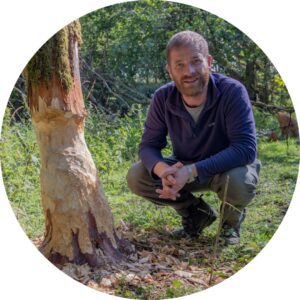
 This blog, written by guest author Tom Bowser, offers an on-the-ground perspective on beaver reintroduction to a working farm in Scotland. As the first private landowners to rehome beavers under licence, Tom offers a thoughtful reflection on the realities of coexistence and what he has experienced since their return.
After an absence of centuries, beavers are returning to Britain’s waters. For anyone alarmed by the collapse of biodiversity on this island, the restoration of these ecosystem engineers is a cause for joy. In an environmental crisis that is fast outpacing us all, beavers are one of the greatest allies we have. Of course, most Brits have no experience of living with these animals; we’ve forgotten what they do, forgotten what they are. Perhaps for that reason, their return is sometimes greeted with concern, particularly amongst land managers.
This guest blog is an account of my four years living and managing land alongside beavers. It tells of the (occasional) challenges and the (many) successes we’ve experienced since translocating them to our farm. I write it in the hope that it goes some way to convincing other land managers that, across most of Britain, there is little to fear and much to celebrate as beavers recolonise our waters.
Before we go any further, allow me to introduce myself. My name is Tom Bowser. From our central Scotland livestock farm, my family and I run Argaty Red Kites, an award-winning rewilding project. In 2021, we became the first private landowners in Scottish history to legally release beavers into the wild. Working with the incredible people at Beaver Trust and Five Sisters Zoo, we have, to date, rehomed 20 beavers.
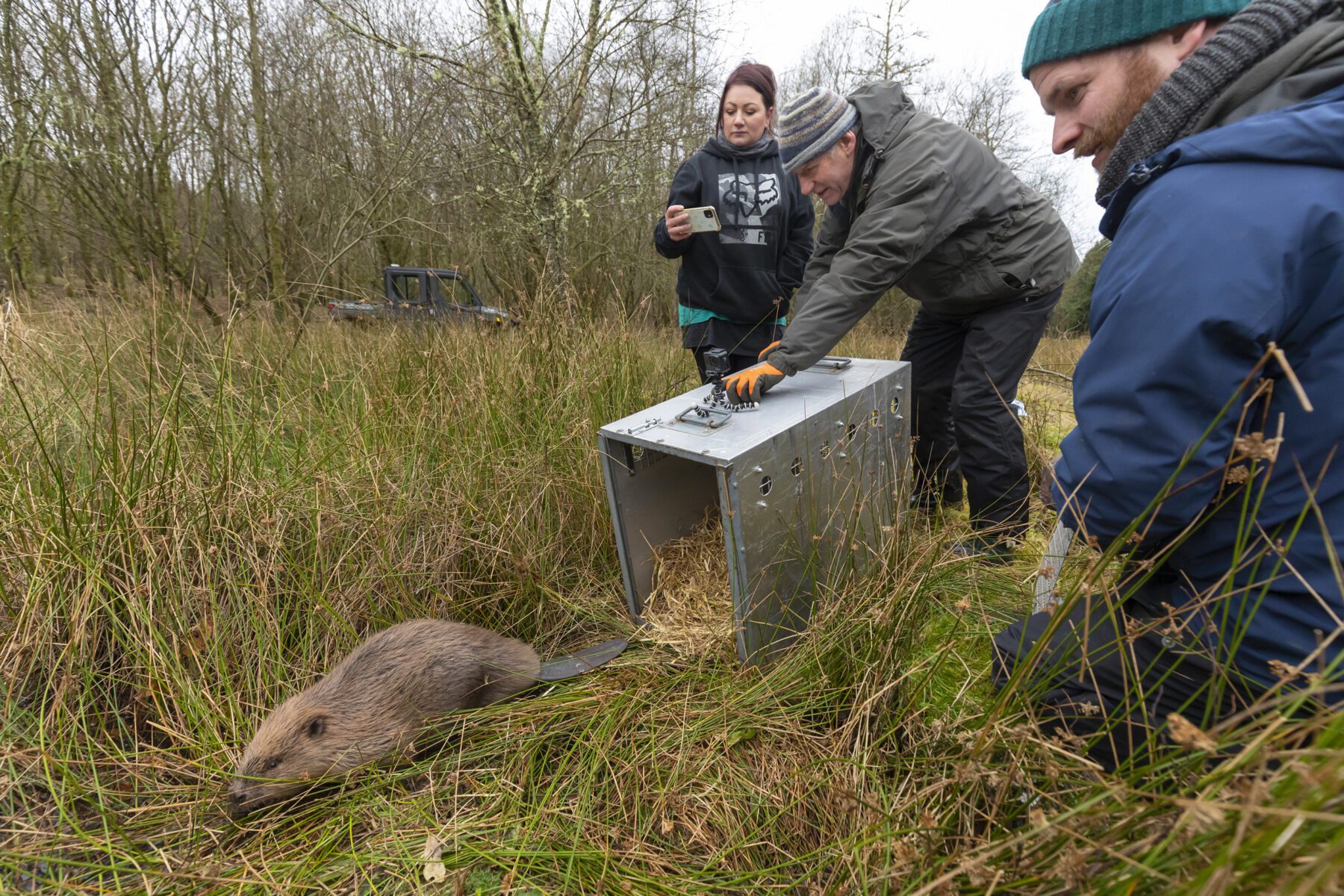
Strange as it may sound, I had little idea of what to expect when beavers first came to Argaty. Of course, I had visited a few established wetlands and seen what beavers do, but not what those places used to be prior to reintroduction. We would see a massive boost to biodiversity – that much had been proved repeatedly across their global range – but would they change our farm out of all recognition?
The answer, happily, was “no”. Argaty remains a working farm. We still produce food. Any notion that Britain must choose between feeding its people and restoring ecosystems is entirely false. We can and must do both. I hope that our farm provides an example of one way of achieving this.
Living alongside beavers is not without its occasional challenges. Felling branches that flatten fences… pilfering the stubble turnips we’ve sown as feed for sheep… I love the beavers, but I have to admit, sometimes they can be annoying.
One incident epitomises this point more than any other. Two years ago, hoping to capture footage of beavers felling trees, we mounted a rather expensive trail camera near to one of their ponds. The camera is linked to an app on our phone, allowing us to watch the action live from the comfort of our home. Logging in, we were surprised to note that the view showed nothing but sticks and mud. In mounting the device upon a wooden stake we had made a fatal error. The beavers had plucked it like a flower from the ground and added it to the growing number of sticks thatching the roof of their lodge. The story went viral, making the press in five different countries; ‘wood you believe it,’ jokes followed us at every turn. Fame is not always what it’s cracked up to be. Lesson one of living with beavers: if they can make a fool of you, they will.
But in the main they bring few unwanted impacts, and each has proved easily dealt with. We keep a chainsaw sharp, ready to cut branches that might fall onto fences. Favourite trees are easily wrapped with wire. We handle nature with a light touch, intervening only when necessary.
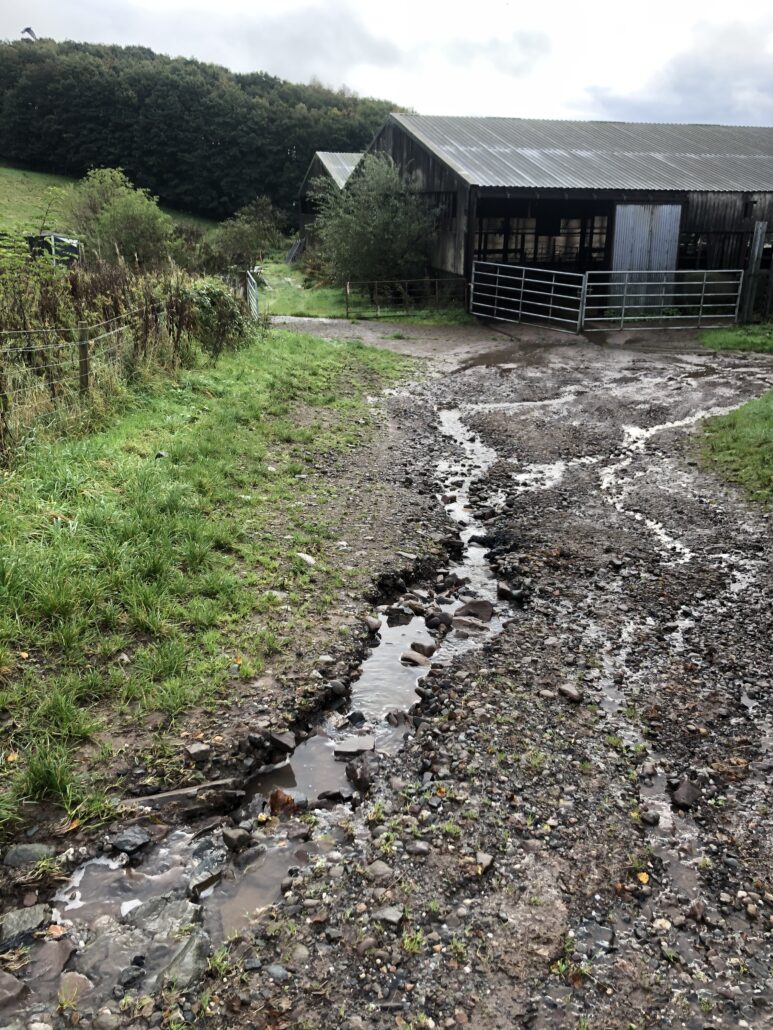 And the small challenges seem inconsequential in comparison to the many benefits the beavers have brought. In earlier years, we suffered terrible flooding issues on Argaty. In our increasingly wet winters, a stream that flows through the hills above our yard would often burst its banks, wash away the farm track and rage through sheds. We’d have the track repaired, knowing that the next storm would sweep it away again. It costs around £500 to hire a digger driver for a day, and in most winters, we’d lose the track four to five times. Since the beavers arrived, built dams, dug canals and did all the other things they do to slow the passage of water through a landscape, we’ve lost the track only once… in the wettest years Britain has ever known.
In heatwave summers, we’ve seen further beaver benefits. This past year was particularly terrifying. Many weeks passed without a sign of rain. The grass turned a parched shade of yellow. Wildfires raged through Scotland. While all other ponds and streams on Argaty were evaporating to nothing, the beaver dams held water and thousands of species flocked to them. In this harshest of years, a premonition of the harder times that will come as climate change intensifies, the beavers were the difference between life and death for so many species. Our sheep benefitted from their engineering too, enjoying a constant supply of water that the beavers had trapped behind a dam.

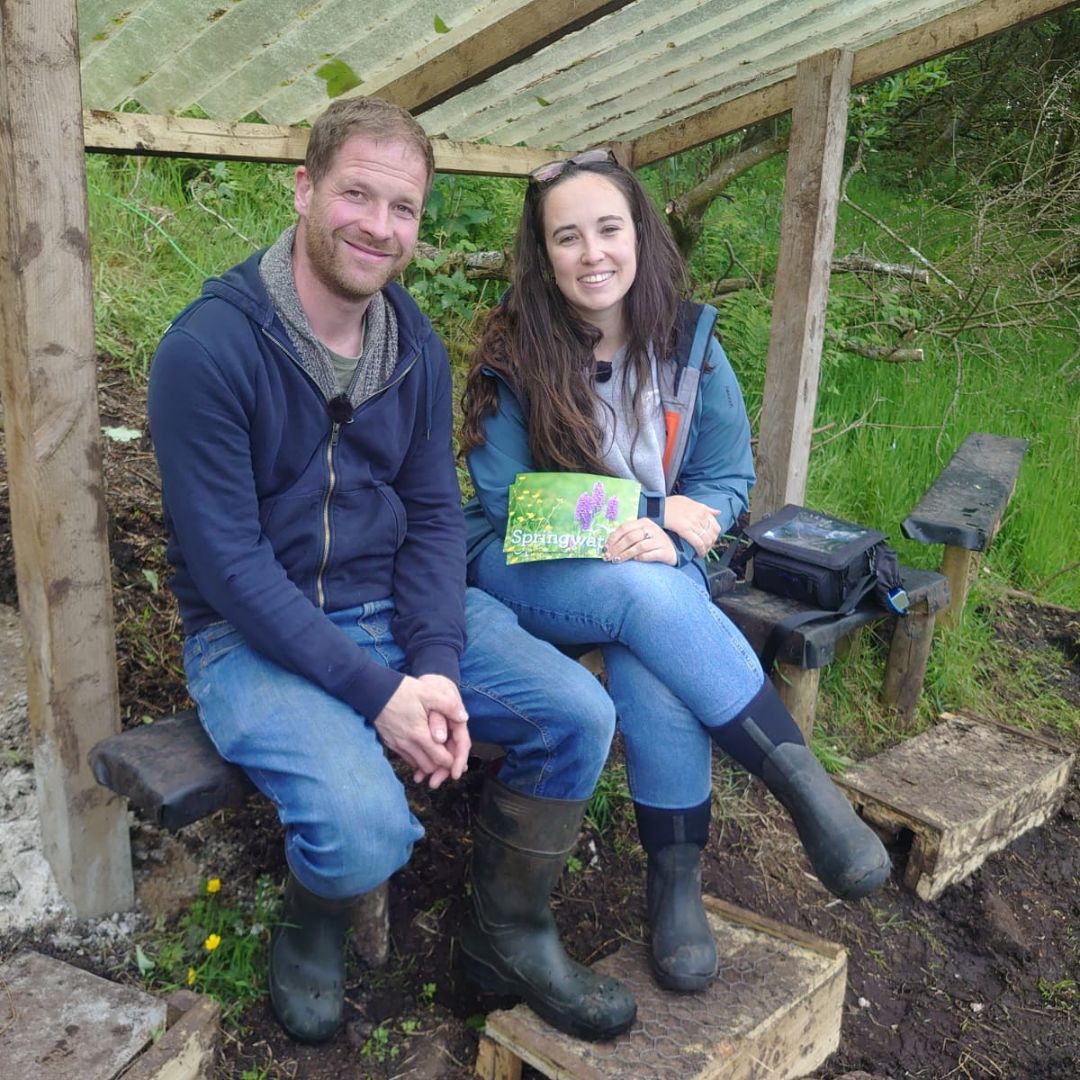
As a farm and a family, we’ve been lucky. Perhaps because we were the first people to rehome beavers in Scotland, interest in our project has remained high. I’ve written a book, Waters of Life, which tells both of our fight to get beavers to Argaty and of the incredible gains they’ve since brought us. We’ve filmed with Hamza Yassin, Gordon Buchanan and Springwatch. Our evening beaver-watching tours, which run from May to August, sell out as soon as they’re advertised and have become a vital part of our business. Some might think it crass to talk about making a living from nature, but if we don’t show that it’s possible to do then farmers may see little reason to restore species and habitats on their land – when 70% of the UK is under agricultural production, this would be a missed opportunity.


One of the biggest beaver-related excitements came in 2023 when we were awarded a Scottish Government grant to create a demonstration project – fencing off waterways and restoring missing riparian woodland across the length of the Argaty Burn (a stream which runs through our farm and leads to the River Teith). Would we have gained this grant were it not for the beavers? I doubt it. The publicity they have brought us surely pushed our project over the line.
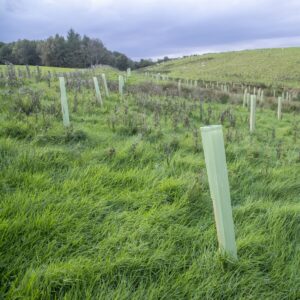
And when it comes to the many thousand willows, alders, aspens and birches we’ve planted, the beavers have shown remarkable restraint. Thus far they have felled just five. Can riparian woodland be restored in the presence of beavers? My answer thus far would be an emphatic “yes”. A ten metre riparian buffer would cost most farmers little in terms of agricultural output, but it can make a huge difference to nature. Let us hope that governments see the value in making space for rivers to function and incentivise such schemes in the future – they will prove key to accommodating beavers across Britain’s farmland.
We have so much to thank the beavers for; they have been the making of Argaty. Every farm is different, and the opportunities and challenges beavers bring will vary from site to site, but when I cast my mind back a few short years and remember the apprehension I felt about bringing beavers here, I realise how misplaced those fears were. As a species, we humans often seem paralysed by fear of change. But when something is broken, as Britain’s ecosystems surely are, then surely change is necessary.
As a land manager and lover of nature, I look forward to watching beavers recolonise this island. I hope that what we have done in making a home for them on a working farm will go some small way towards helping their return nationwide. I am confident that most farmers have little to fear from them. Beavers are a friend, not a threat.
From their central Scotland farm, Tom Bowser and his family run The Argaty Red Kite Project www.argatyredkites.co.uk
Tom’s book Waters of Life: Fighting for Scotland’s Beavers was published this year by Birlinn. For more information visit: https://birlinn.co.uk/product/waters-of-life/