
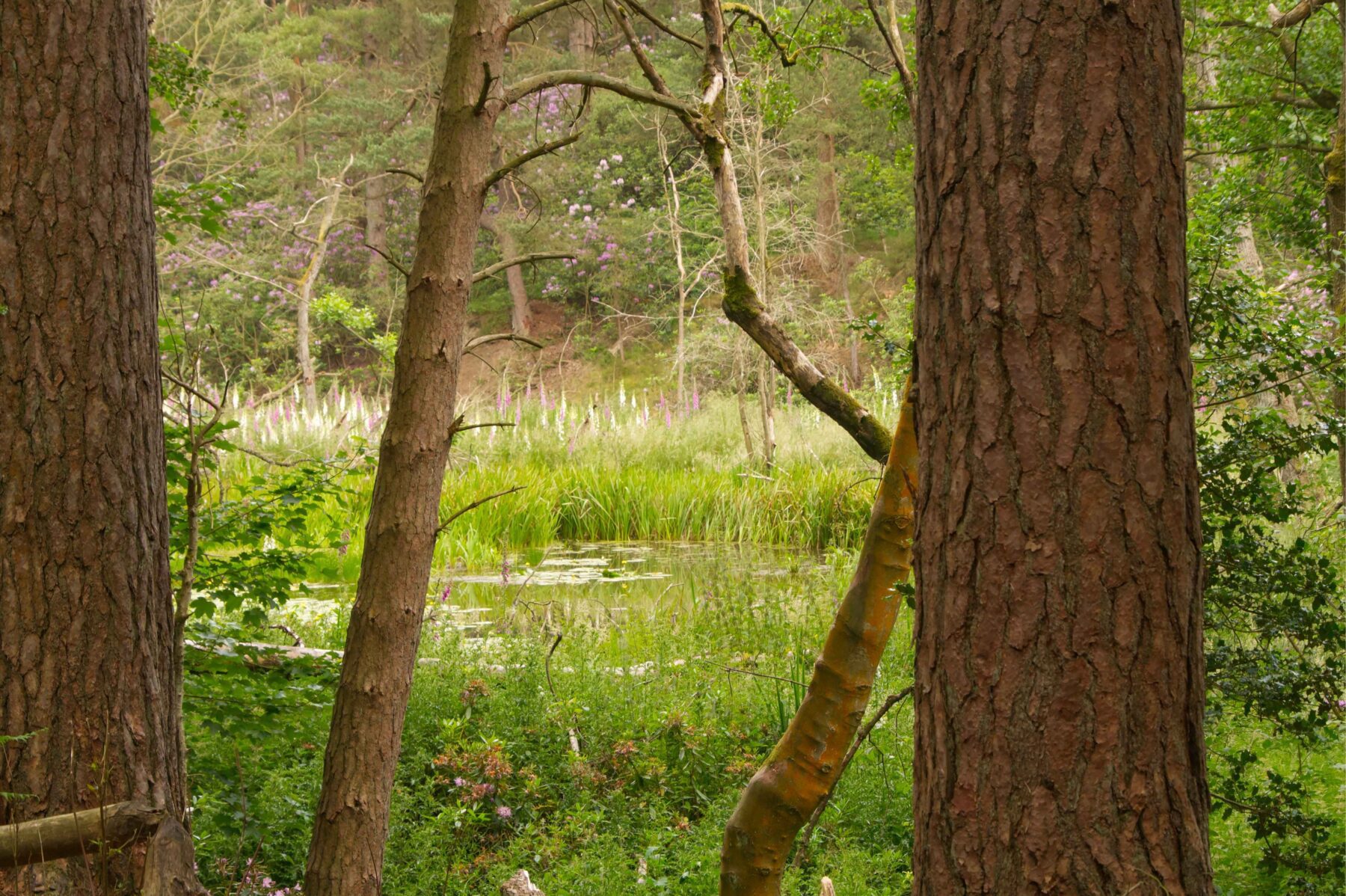
The Beaver Trust team recently visited Cropton Forest, as part of our bi-annual team gathering. As a fully remote team spanning the length of Britain, these gatherings are an important opportunity for the team to meet, discuss our work and collaborate on decision making. It’s also a highlight of the calendar for many of Beaver Trust’s desk based staff and trustees, as we get the chance to visit a beaver site, and remind ourselves of the amazing landscapes we’re helping to build by restoring beavers to Britain.
Stepping into the beaver wetland at Cropton Forest felt like stumbling into an orchestra of birdsong, accompanied by the general hum of a living landscape. The short walk along the fence-line of the enclosure through the more densely wooded areas was comparatively quiet, giving the birdsong quite the crescendo as the canopy opened. According to the 2024 report on the beaver trial, there have been a few changes to this chorus. A portion of the great tits and chaffinches have left the woodland some distance from the beaver activity, but wetland bird species, like Moorhen, have arrived. During our visit one was dancing rapidly across the pond, likely chasing the abundance of invertebrates.
The Cropton Forest Beaver Trial started in 2019, as part of a flood mitigation measure to slow the flow of the river. The woodland was previously a forestry plantation, full of tall sturdy conifer trees and patches of birch. Here and there, spikey sprigs of holly and gorse also made an appearance. As we approached the bank of the largest pond onsite, Cath Bashforth -Species Recovery Officer for Forestry England- explained that the sloping nature of the landscape made it unsuitable for modern forestry machinery. The beavers clearly had no such trouble. On the opposite bank, a large pile of felled trees was just visible – an abandoned beaver lodge. The beavers had since moved their busywork downstream within the enclosure. Around us, evidence of the beavers coppicing work sat low on the forest floor. Gnawed stumps and logs, some old, dark and lichen covered, and some newer, freshly felled, wood.
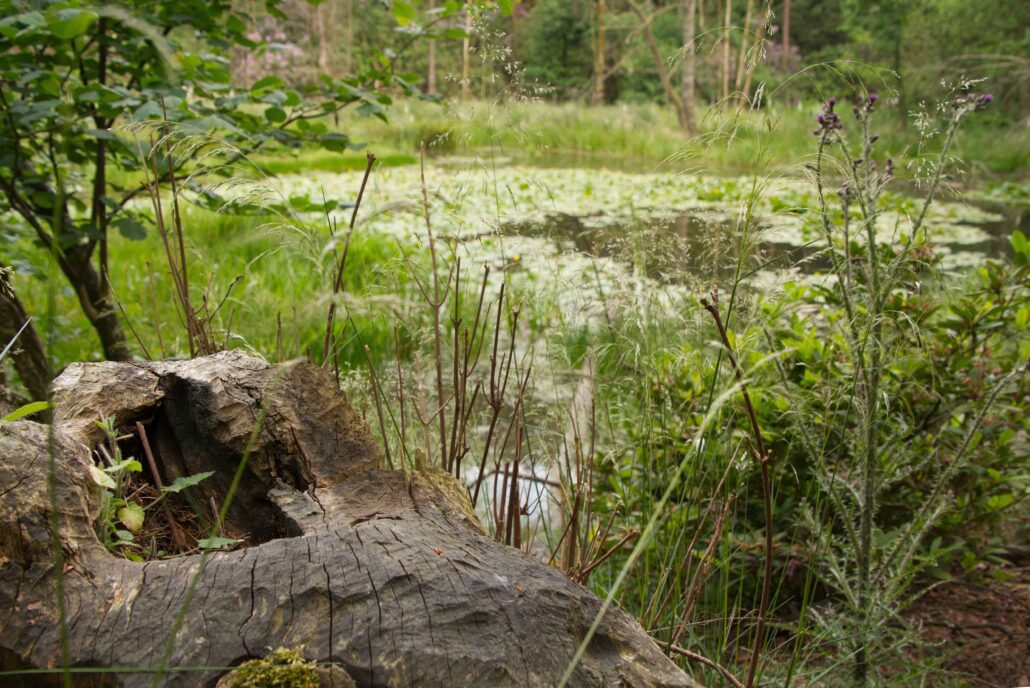
The abandoned lodge was not the only evidence of the beavers’ hard work – in fact it was rather overshadowed by England’s longest beaver dam, standing a few meters downstream. Over three years the beavers lived up to their title of ecosystem engineers, building a 70m dam that reached up to 2.7m tall at its highest point. Despite its impressive size, the dam melted seamlessly into the landscape around it, courtesy of the beavers excellent gardening skills. Dams are not just inanimate piles of sticks, they’re dynamic structures that the beavers pack with mud, rocks, and notably, plants. Cath, who has worked with the beavers since we translocated them here in 2019, describes how the beavers split iris plants and buried them along the top of the dam, creating the lush green and yellow bank that we can see now.
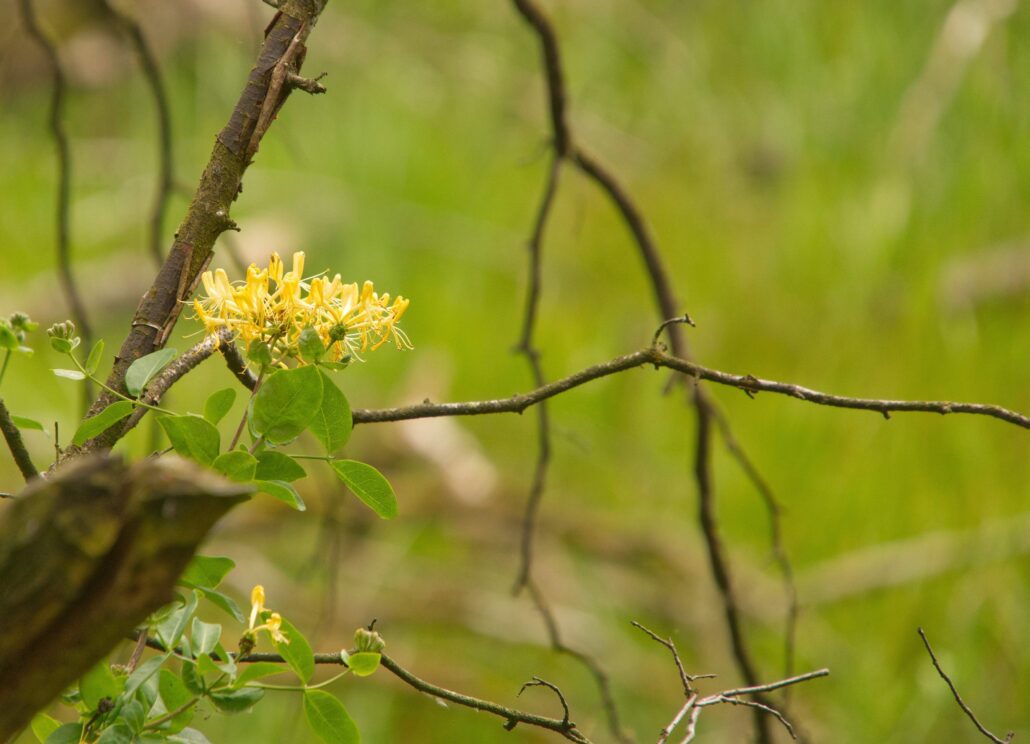
When picturing boggy wetlands in Britain, vibrant colours may not spring to mind, but this beaver pond was a splatter painting of colour. Purple, pink and white foxgloves lined the beaver dam, and patches of yellow water lilies floated in the water. A honeysuckle clung to some deadwood in the centre of the pond, covered in blooms. Prior to the beavers’ arrival, there were ornamental ponds onsite, overtaken by willow, full of silt and with very little visible standing water. Cath said this particular pond was filled with duck weed and the surface covered with the yellow water lilies. These have now been thinned out by beaver activity, and the water was visible – you could see dragonflies hunting over the surface.
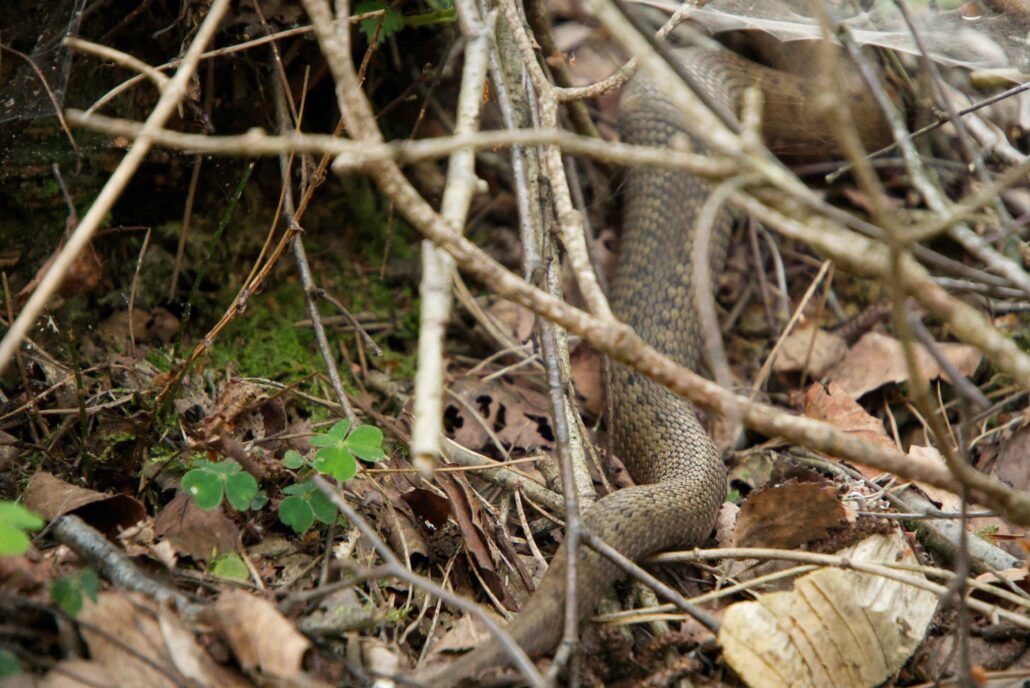
We followed the Sutherland Beck river downstream towards the more recent beaver activity. Our team gathering had been unfortunately timed with the June heatwave, and even in the shade of the forest, it was unreasonably warm. Stepping down the bank towards the beaver pond had a relieving cooling effect, and it is easy to see how beaver wetlands become a refuge for such a diversity of wildlife. The warm weather did supply us with a surprising, and very exciting, wildlife sighting. A female adder was laying by the roots of a tree. She seemed just as startled to see us, and after a few moments of surprise, she swept away into the security of the undergrowth. She was quite round, and the ecology experts amongst the group agreed she was likely gravid – carrying young. To add to the excitement, Cath confirmed she is the first ever adder found onsite.
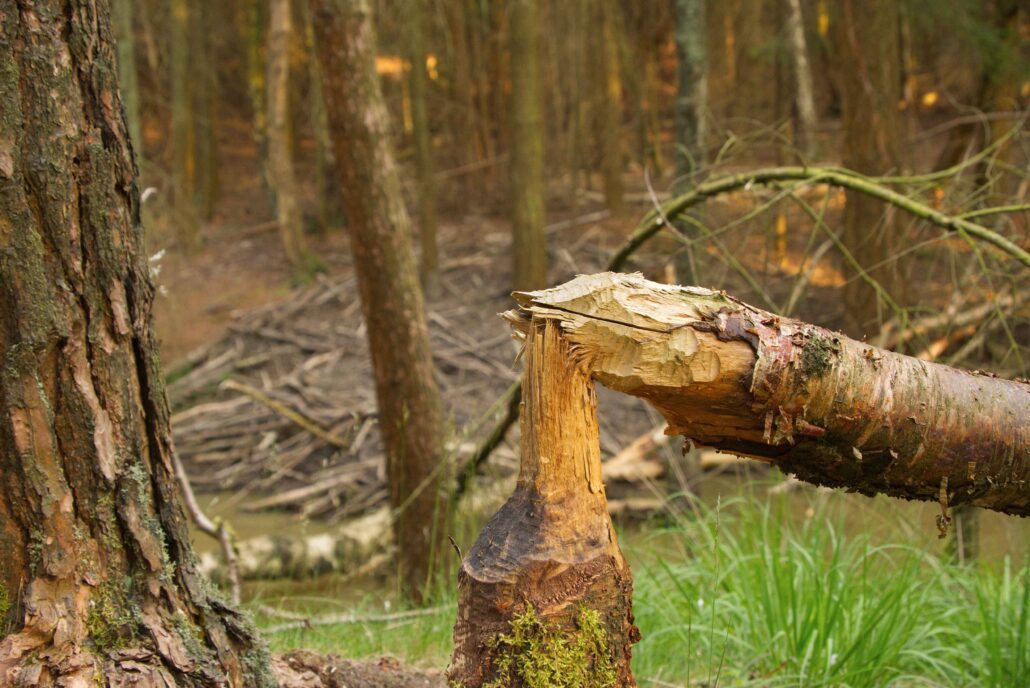
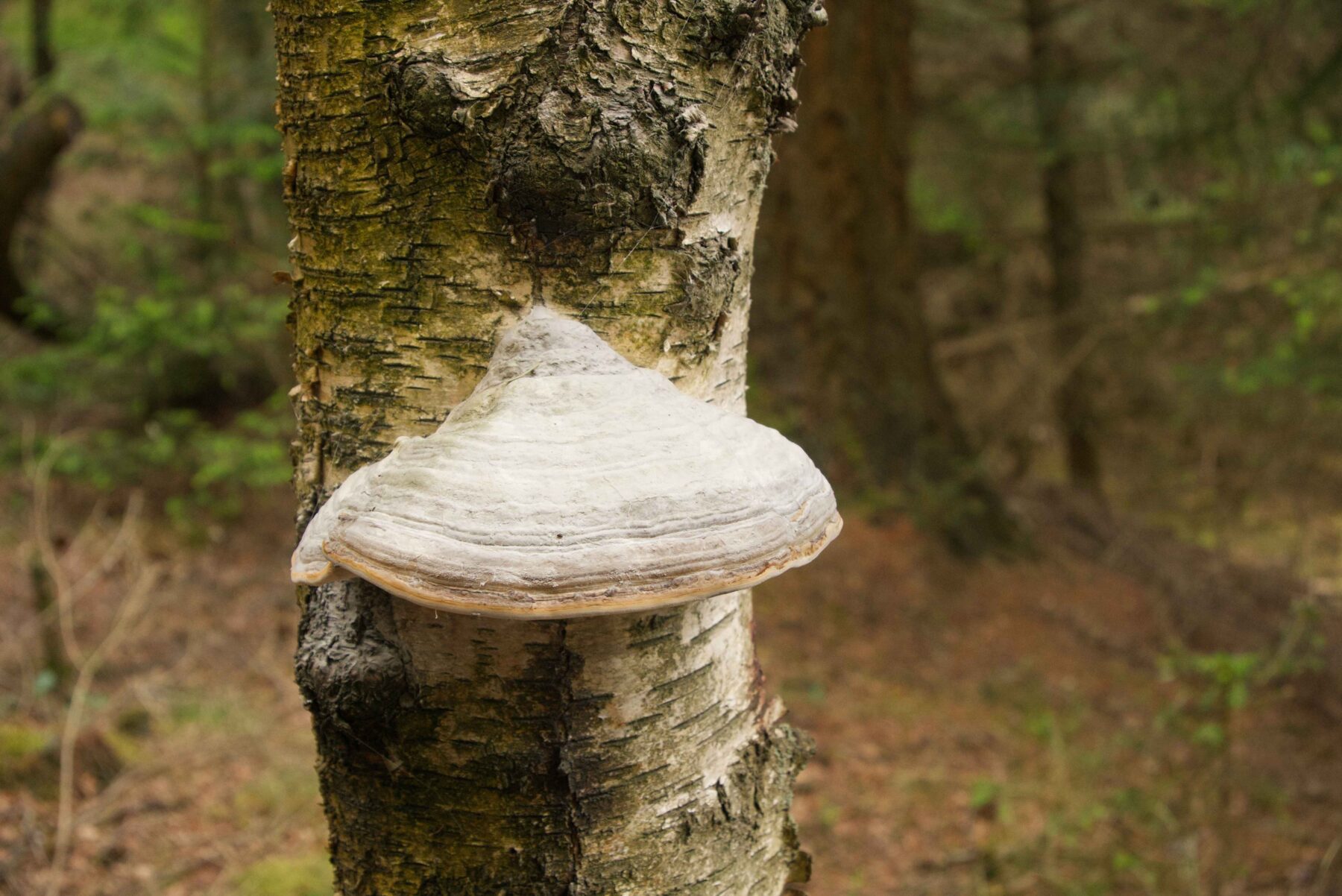
Downstream there were a series of dams of varying sizes, it was interesting to see how beavers had made use of the existing manmade wooden structures in the river, extending and fortifying them to form a dam of sufficient caliber for these exacting rodents. The areas with the more recent beaver activity had denser woodland, and plenty of standing deadwood in the swampier water. Nearby we saw a large, white bracket fungus sporing, and ‘beaver chips’ (small chips of wood from beaver tree felling activity) carpeted the forest floor around a few part-felled trees. Deadwood is an important resource, not just for fungus, but for a great diversity of invertebrate species that feed on the rotting detritus. These tiny critters go on to fuel the food web, predated by birds, amphibians, small mammals and other invertebrates, creating an ecosystem bursting with biodiversity.
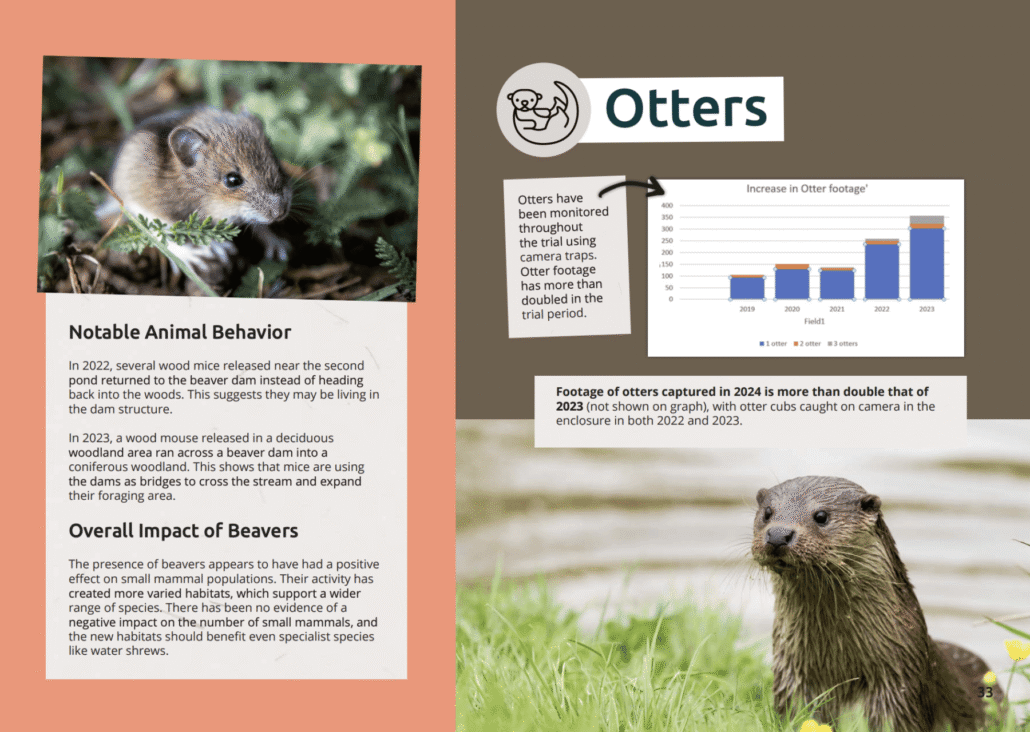
It was in this stretch of river that a few members of the team heard a splash! Sadly, no beavers emerged, it was still early, and they were likely sheltering from the heat in their lodge or a burrow. The most likely explanation for the sudden slap of water are the fish in the river that support the local otter population. Camera traps have shown evidence of otters in the enclosure, including several otter cubs, with the number sighted on camera increasing massively throughout the beaver trial.
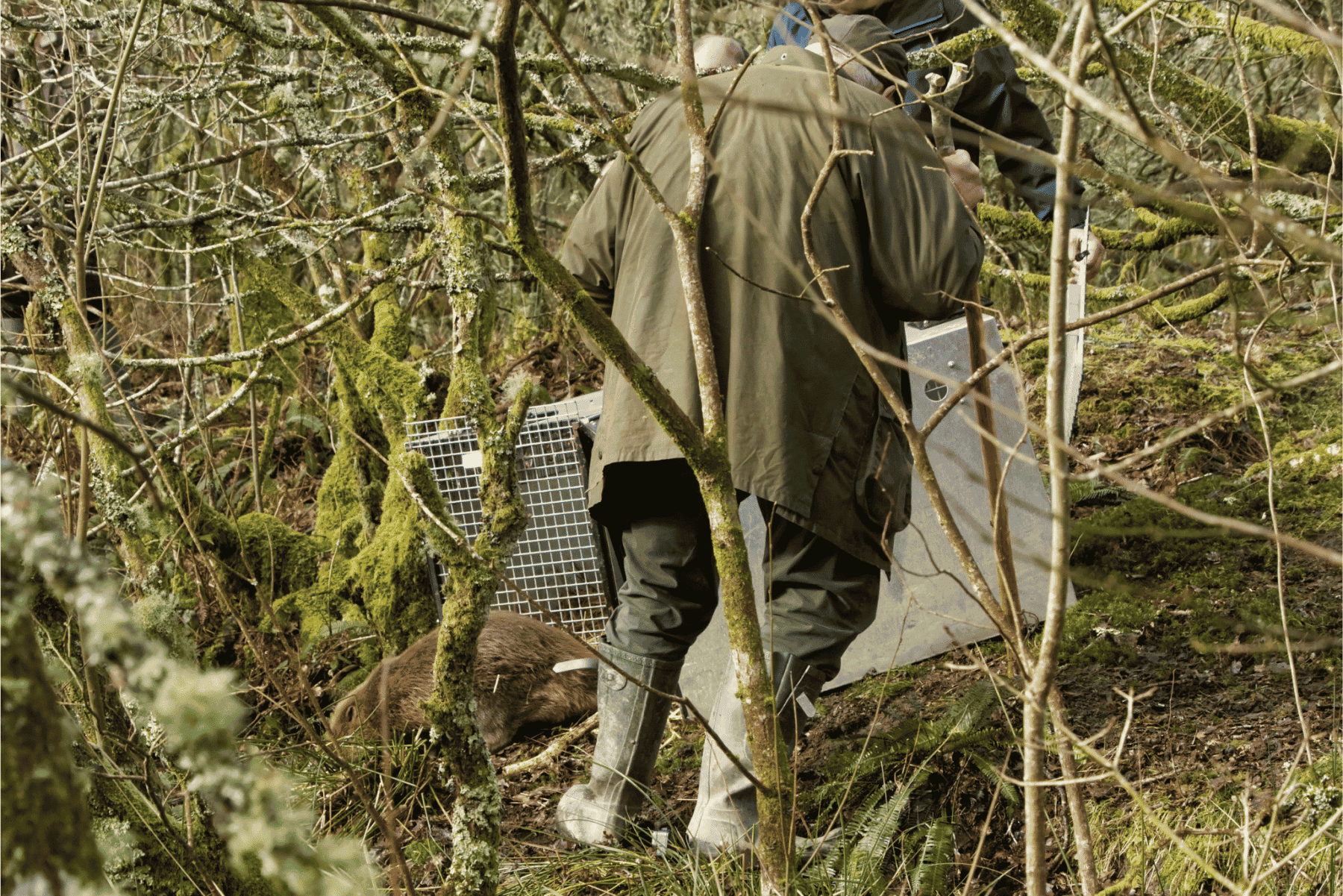
While we were too early in the day to see beavers, we know this family is thriving. Between their arrival in 2019 and the end of the first trial period in 2023, the family had eleven kits split across five litters. Beaver Trust operates the beaver studbook in Britain, to ensure we’re creating resilient, diverse founder populations of healthy beavers. As part of this restoration work we’ve moved many kits from Cropton onto other projects and release sites across the country. Some have since had kits themselves, and others, like Parsnip, have been part of licensed wild releases. Those that remained have helped to engineer this amazing habitat, improving flood resilience and boosting biodiversity. The site has been an asset to researchers, and the subject of many scientific studies that are helping to inform ongoing beaver restoration work in Britain.
As our tour neared its end we reached the fenceline, and the canopy opened up for a second time. Here, birch had been the dominant species and the beavers had gone to town reconnecting the river with its floodplain, creating a large boggy wetland -full of deadwood. Birch is a coppicing species, like willow. This means that with time the stumps of the felled trees can regrow, creating a gradient of forest structure, and the beavers can restock their larder with fresh young sticks.
Our tour of Cropton Forest was a wonderful way to ‘walk through time’ as we saw the changes the beavers have made along the river during the Cropton Forest Beaver Trial, successfully ‘slowing the flow’. It was an amazing reminder of the impact that our restoration work can achieve. We’d like to thank Cath, for lending us her time and knowledge of the site.
If you want to learn more about the trial, you can read Forestry England’s report here.