
 Heal Rewilding is a nature charity dedicated to helping nature recovery, climate action and wellbeing through buying land and rewilding it. Discover their journey since wild beavers arrived at their foundation site in 2024.
Two and a half years ago, we spotted a few freshly gnawed willow stems beside a small stream at Heal Somerset. It was a tiny clue, but one that would lead to one of the most exciting wildlife stories we’ve ever had the privilege to witness.
A month later, a trail camera confirmed our suspicions: a beaver had arrived. We were absolutely thrilled. Shortly afterwards a second beaver made an appearance and since then, we’ve watched them transform both the landscape and our understanding of what nature can achieve when given the chance.
In May 2024, the first dam appeared, with a second one following in June 2024. However, things really started getting exciting in May 2025 with the beginnings of a small dam just across the road from Heal’s farmhouse – a.k.a. our office. What started as a handful of sticks across one of the small, steep-sided tributaries of the River Frome running through our land gradually grew into a thriving wetland, complete with pools, channels and a growing network of dams.
Then came even more exciting news. In summer 2025, we captured footage of our first Heal-born beaver kits – three in total. Seeing them emerge for the first time felt like a real milestone, confirming that the family had settled in and was thriving.
And then this year came an even bigger surprise…
This summer we have confirmed not one, not two, but FIVE new kits! A litter of this size is unusual – two or three kits is more typical – so it’s likely that our adult beavers may take a break from procreating next year to maintain a healthy balance. If last year’s youngsters are still living alongside their parents, as we expect, that means our beaver family now numbers an incredible ten individuals. Kits typically stay with their parents for around two years before leaving (or being kicked out) to find their own territories, but while still at home, they are deeply involved in all aspects of family life, including kit-sitting the new litter.
We’ve loved seeing the older kits learn from their parents. Trail camera footage has captured them carrying sticks, gathering materials and helping maintain the dams. It’s a fascinating glimpse into beaver family life and the way skills are passed from one generation to the next.
Watching this family grow has been a joy, but so too has watching the impact they’re having on the landscape. Over the last two and a half years, the beavers have demonstrated just how quickly natural processes can transform ecosystem health. Their dams have slowed and stored water, creating a wetland with wide, deep pools where there was previously just a narrow channel. Their activity has increased biodiversity, creating habitat for a wide range of plants, invertebrates, amphibians, birds and mammals.
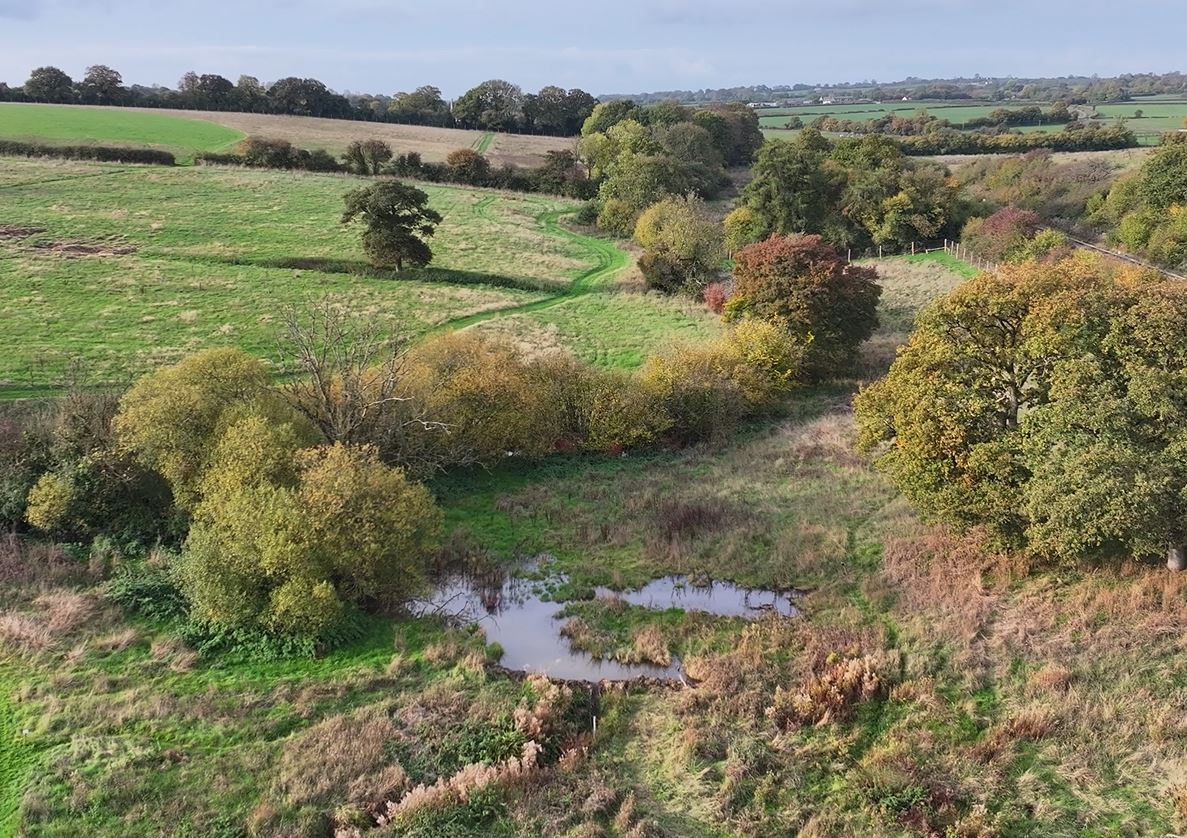
It has also increased the resilience of the land – it was notable during last summer that the area around the dam remained vibrant and the wetland pool retained water despite prolonged drought conditions. Earlier this year, we experienced months of rain, with stories of flooding dominating the news. We were delighted that the roads and village just downstream of our land did not flood – and while we cannot with any certainty attribute this to the work of the beavers, this certainly follows what we’d expect to see. Storing more water on the land and slowing its flow reduces the risk of flooding downstream, meaning that by making our land wetter, the beavers are helping to mitigate against the effects of extreme weather.
For us, they have become powerful partners in the wider restoration of Heal Somerset. Their work complements our own efforts to restore habitats and natural processes, often achieving in months what would otherwise take years.
Alongside the beavers’ natural engineering, we’ve been busy with our own ecological projects. Last summer, we completed a deer fence around part of the site to protect new saplings and encourage woodland regeneration. Of course, we wanted to ensure that beavers and otters could continue to move freely along the river, so we worked with an environmental river restoration expert to design a bespoke river gate – one that would stop deer but allow aquatic wildlife to pass.
Our first design wasn’t perfect; trail cameras revealed that small deer, including muntjac and young roe, were still slipping through. After a few tweaks – adding additional horizontal planks – we cracked it! Trail cam footage confirms the redesigned gate is working exactly as intended.
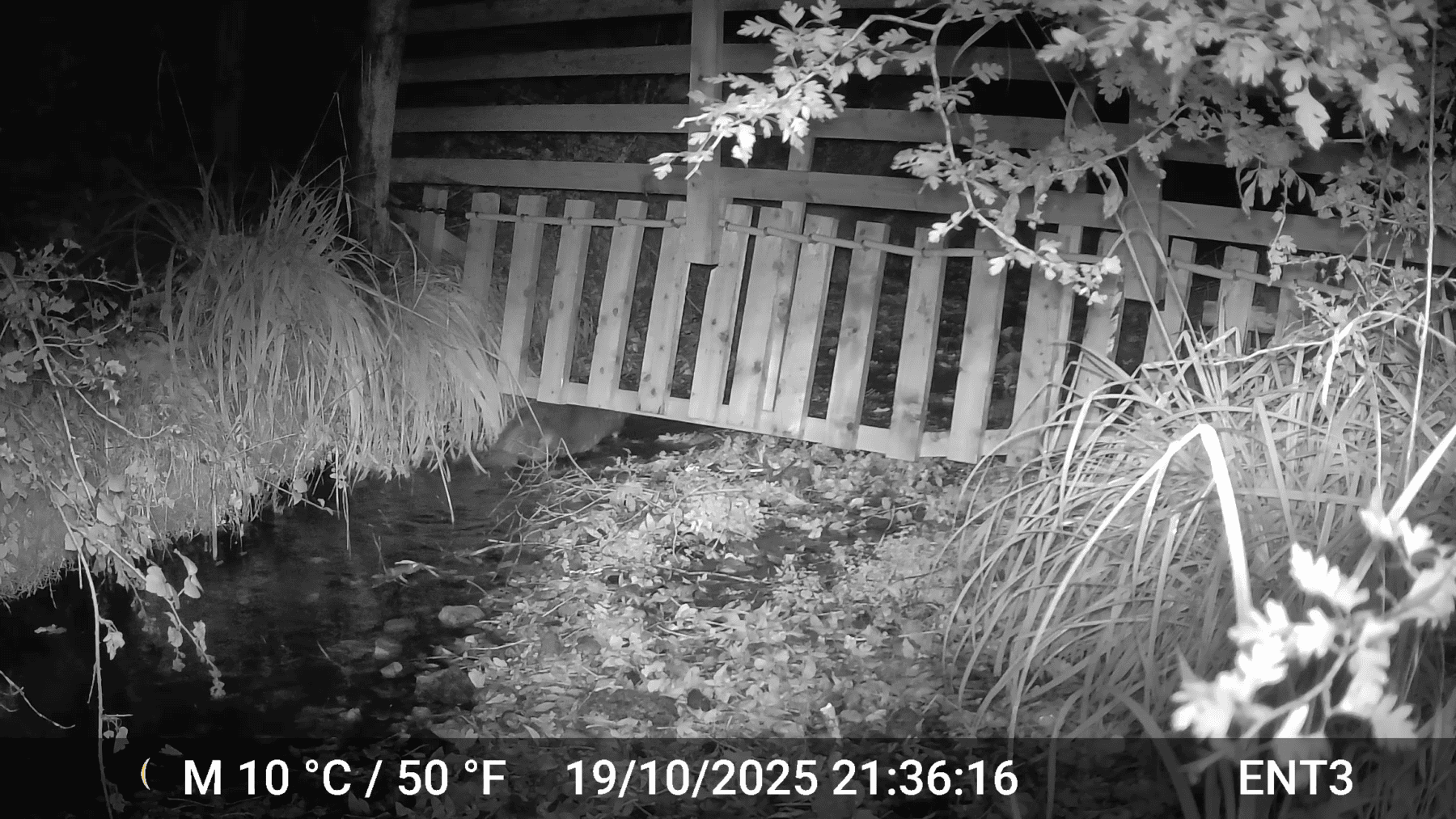
Following our own (engineered) wetland restoration work elsewhere on the site over the winter months, we’ve found footprints and captured footage showing the beavers exploring these newly naturalised wetland areas. Whether they decide to create new territories there remains to be seen, but we’re delighted they’re already making use of the habitat.
We are incredibly grateful that these beavers chose to make their home at Heal Somerset and are honoured that they felt comfortable enough here to have bred such a large family. We can’t wait to see what changes their eco-engineering brings over the next few months.