
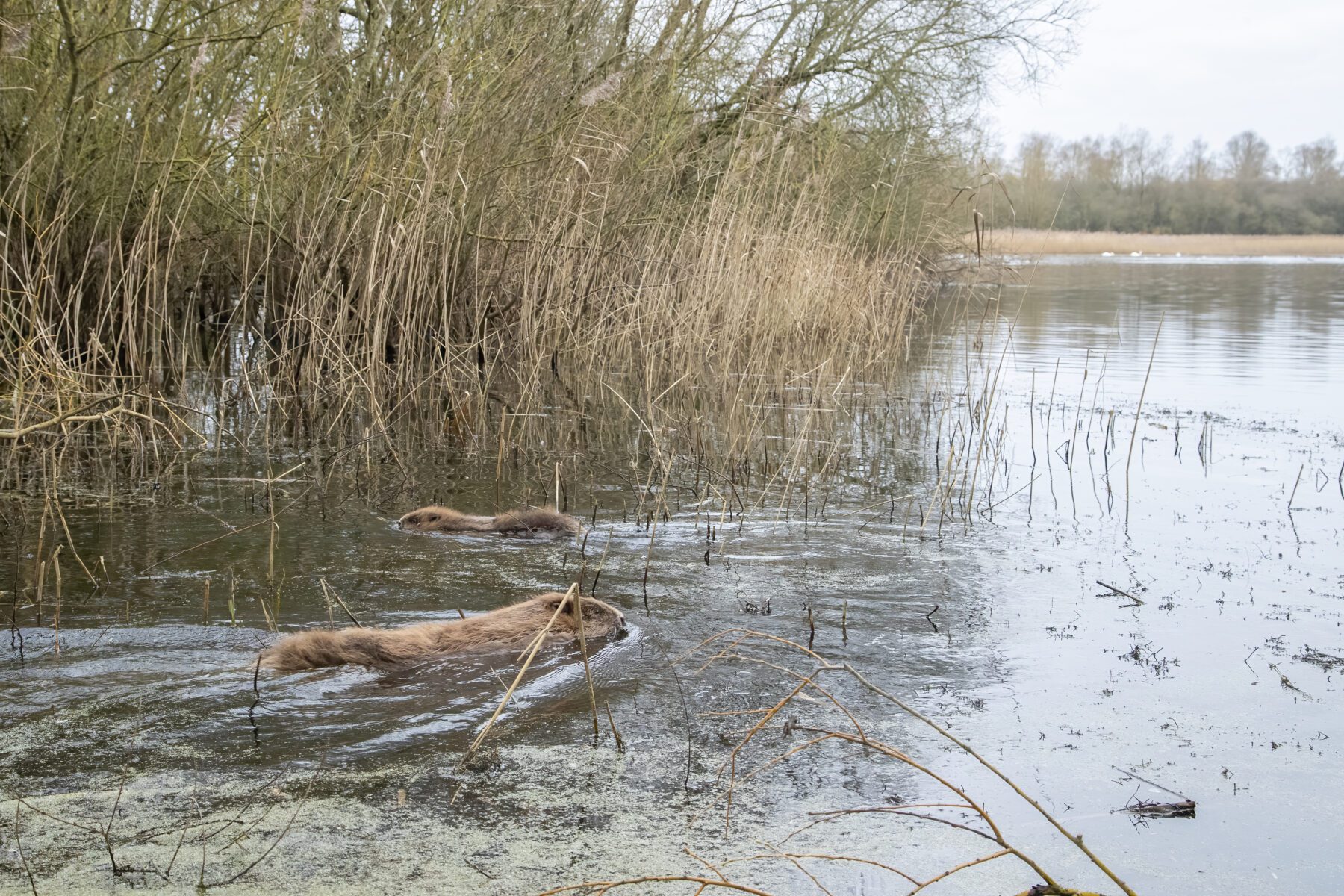
 Isabella Clarke is an independent researcher and broadcast journalist who volunteers with Wildlife Trust BCN. After years of planning, flooding and unexpected obstacles, a family of beavers has begun transforming a Northamptonshire reserve – Isabella went to see the changes first-hand.
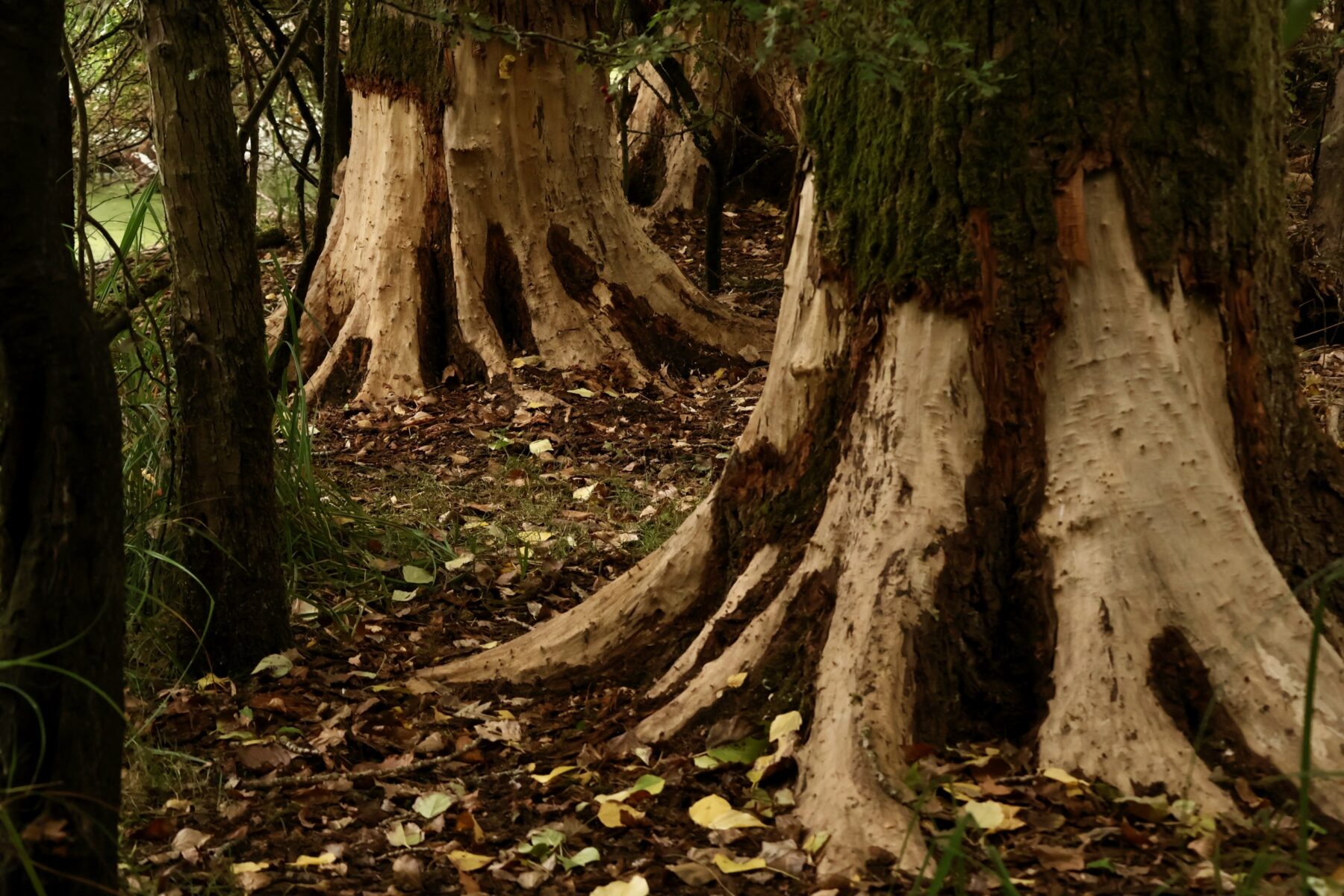
“Nothing can prepare you before you see what the beavers do,’ says Ben Casey, Nene Valley Projects Officer for the Wildlife Trust for Bedfordshire, Cambridgeshire and Northamptonshire, as he considers the evidence of beaver activity in a waterside woodland.
“We talk of what we do in habitat management, but we’re just emulating aspects of the natural environment that we’ve lost. Just plugging the gaps and trying to replicate them. But we couldn’t ever do it in such an interesting and nuanced way. All this is the missing piece. All this is how it should look.”
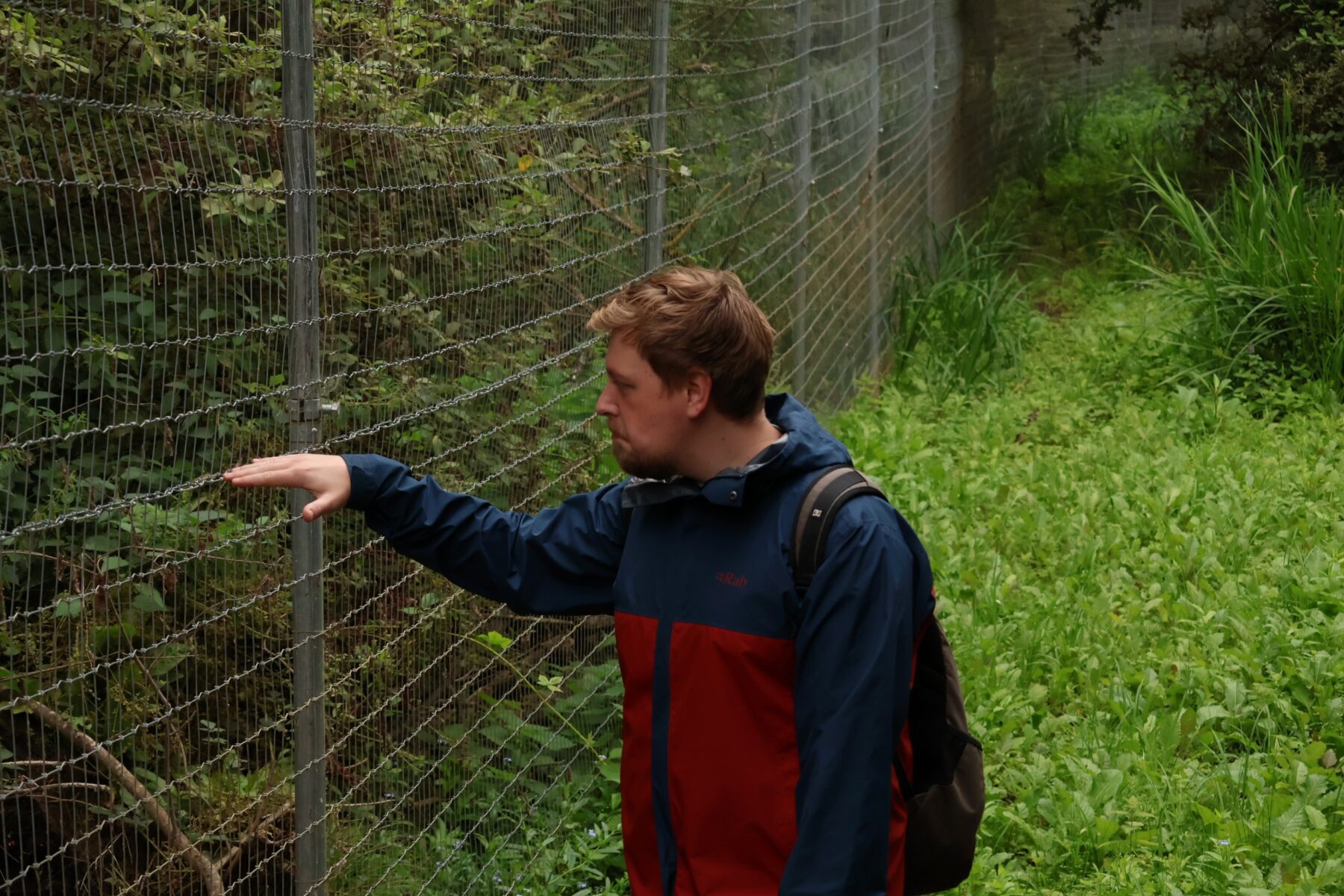
The Wildlife Trust for Bedfordshire, Cambridgeshire and Northamptonshire released a family of eight beavers into a 17ha enclosure on their Nene Wetlands Reserve in February 2025. The idea was initially floated in 2021. After site visits, feasibility studies, extensive research, and fundraising, the work on this project was ramped up in early 2024. Before securing the enclosure, staff and contractors had to fell trees and clear scrub along the 1.7km of the planned fence line.
“It looked dreadful,” says Ben, “and it was hard to convince visitors to the Reserve that it would recover.”
PR issues were the least of their concerns. The proposed fence line had to be moved when they discovered dumped building materials under the surface of the original route, which prevented the contractors from getting the posts dug in to the required 0.9m depth. Once the fences were up and had been approved by the Beaver Trust on behalf of Natural England, two days of extreme rainstorms caused unprecedented flooding. The water rose until it was half a meter below the top of the fence in one part of the site. Cue another visit from the contractors and additional expense.
Once again, they thought they were ready, but the impacts of climate change seemed determined to spoil the party. A high-pressure sewage pipe, which runs underneath the Reserve, burst. The infrastructure could not withstand the expansion and contraction of soil caused by extreme temperature fluctuations over the previous few years.
Ben is philosophical, “We had missed two potential release dates, and the beavers were ready to be relocated at those points. But, in the end, that meant we got the family that we now have.”
The family is Boudicca, a female missing a front paw, her mate Alan (named by a poll after the Northamptonshire comedian Alan Carr), three yearlings, and originally three kits – two more have been born since the family’s translocation. They were trapped and translocated from Tayside in Scotland by Beaver Trust, where they were coming into conflict with human activities.
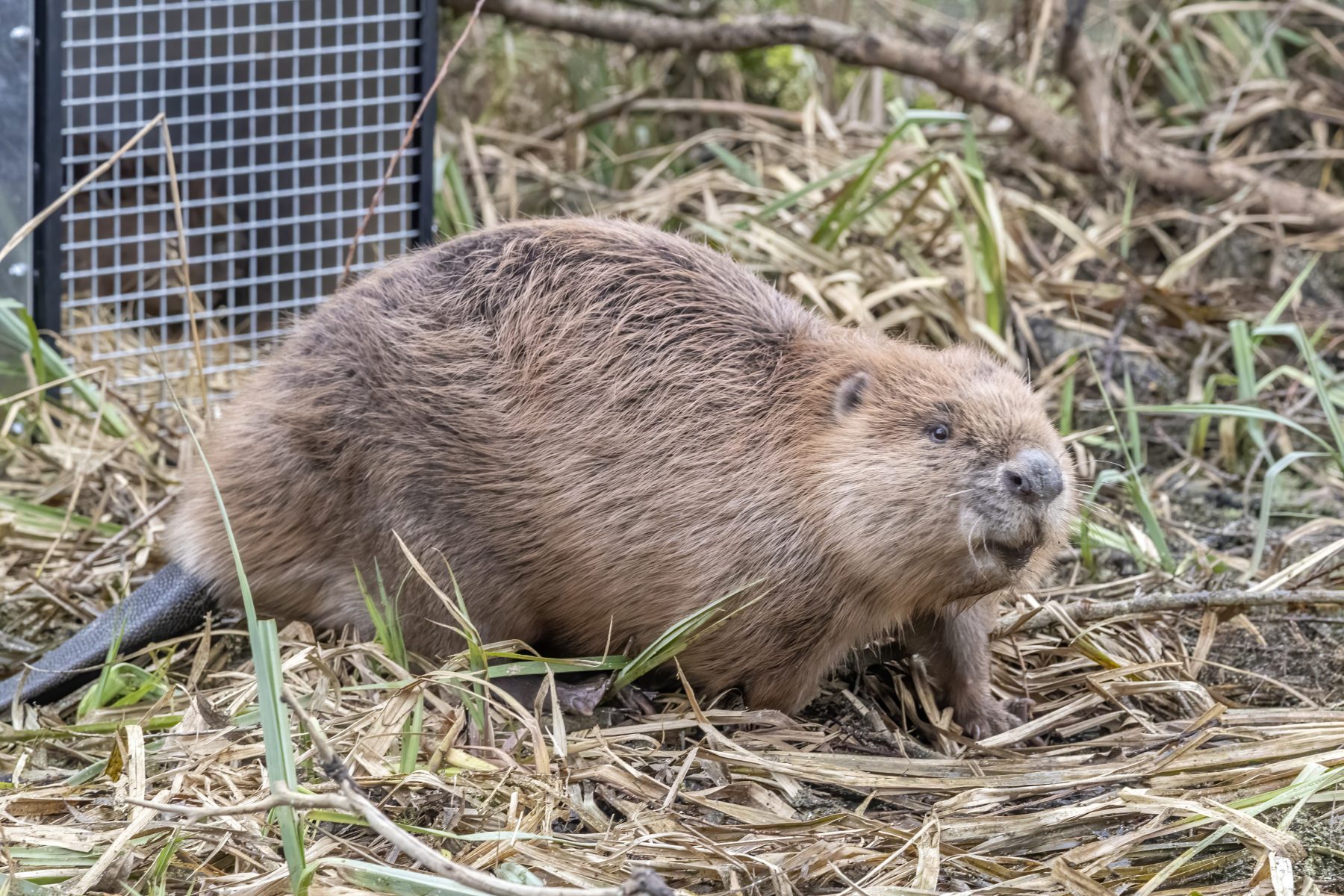
A matter of days after the beavers arrived, the law changed. Until that point, beavers could only be released into enclosures in England; the new law allows release into the wild. Surely that was frustrating? Not according to Ben. And, indeed, it would take some convincing, one imagines, for Natural England to license a wild release in this part of the country, where industrial agriculture comprises much of the land use.
In the long term, the Wildlife Trust BCN hope the fences enclosing this family will come down. In the short term, the beavers are already regenerating the wet woodland. Boudicca and co surprised the Reserve staff by digging canals. Because there are plenty of trees on the edge of the lake, the presumption had been that they would not require canals. The beavers knew otherwise, and the ditches are altering the way water flows around the site. They’ve built two lodges and, as well as stripping bark and eating foliage, have begun to fell some larger trees. In one area, they have cut down most of the young saplings.
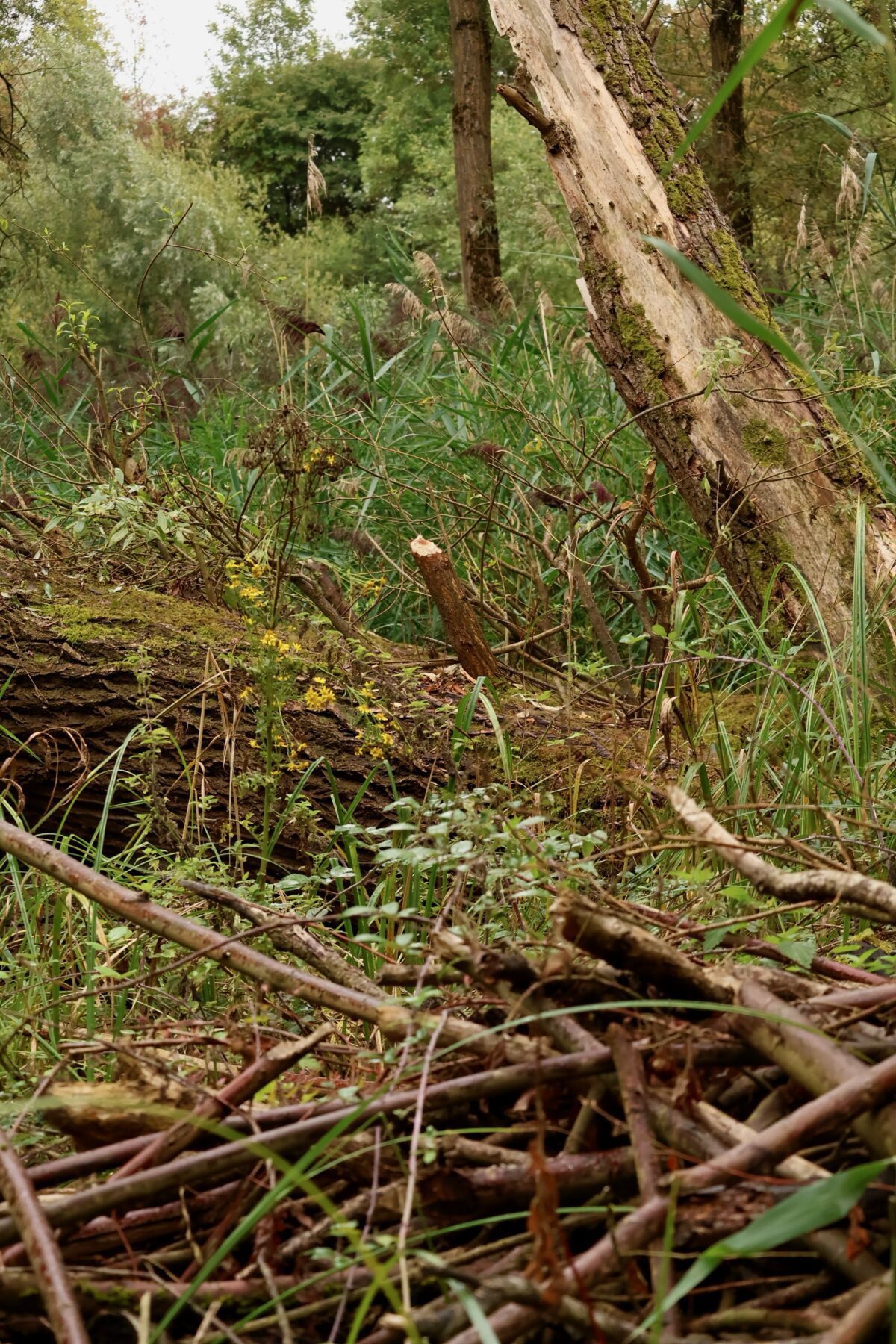
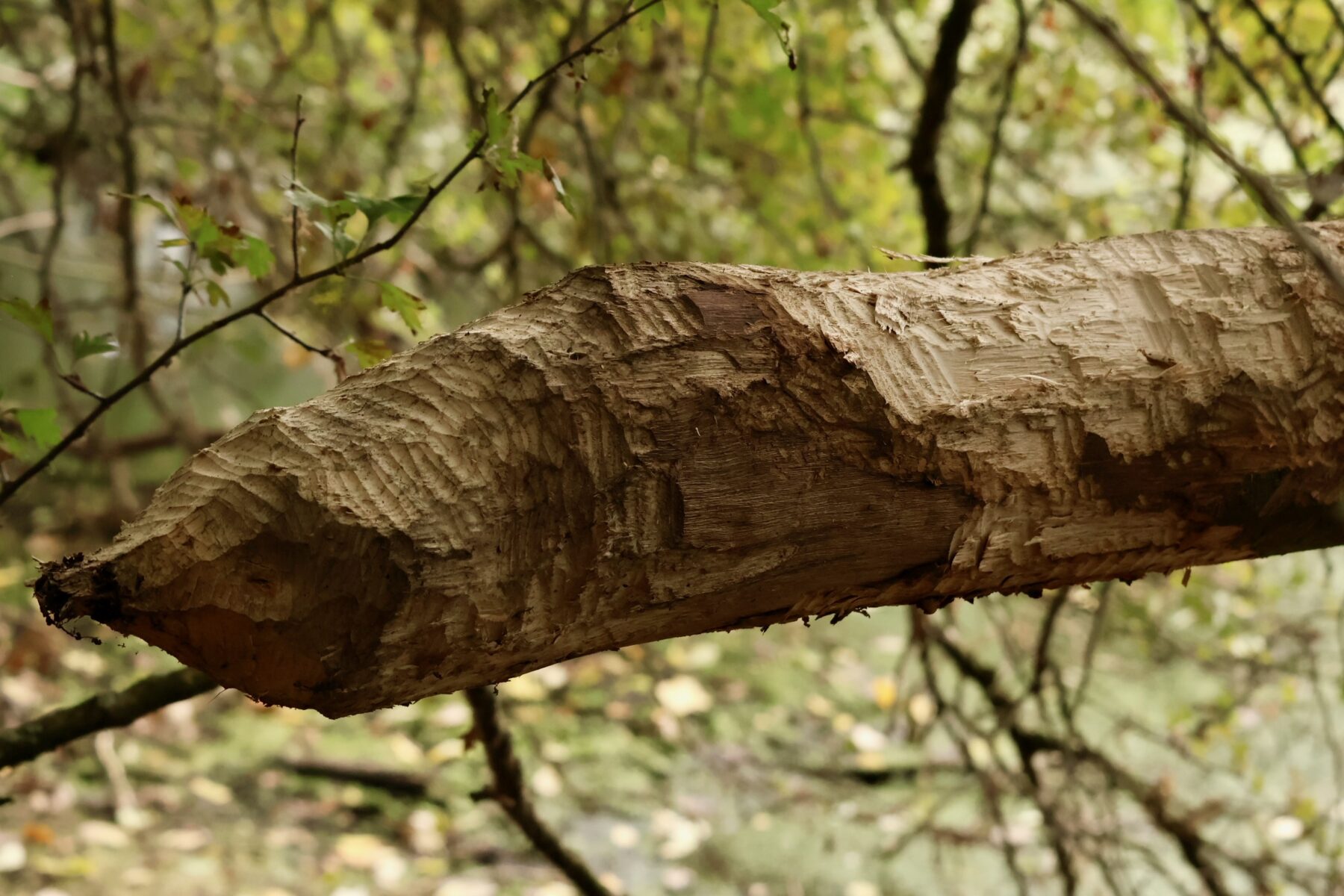
“They are planning for next year,” Ben explains. “The stems will regrow and they will have plenty of juicy leaves. It’s like a garden. Every few weeks, they just blast into a new area. And, eventually, it will all blend together and the structure of the woodland will have become much more complex. It would take a great deal of effort and money for humans to achieve this level of structural diversity.”
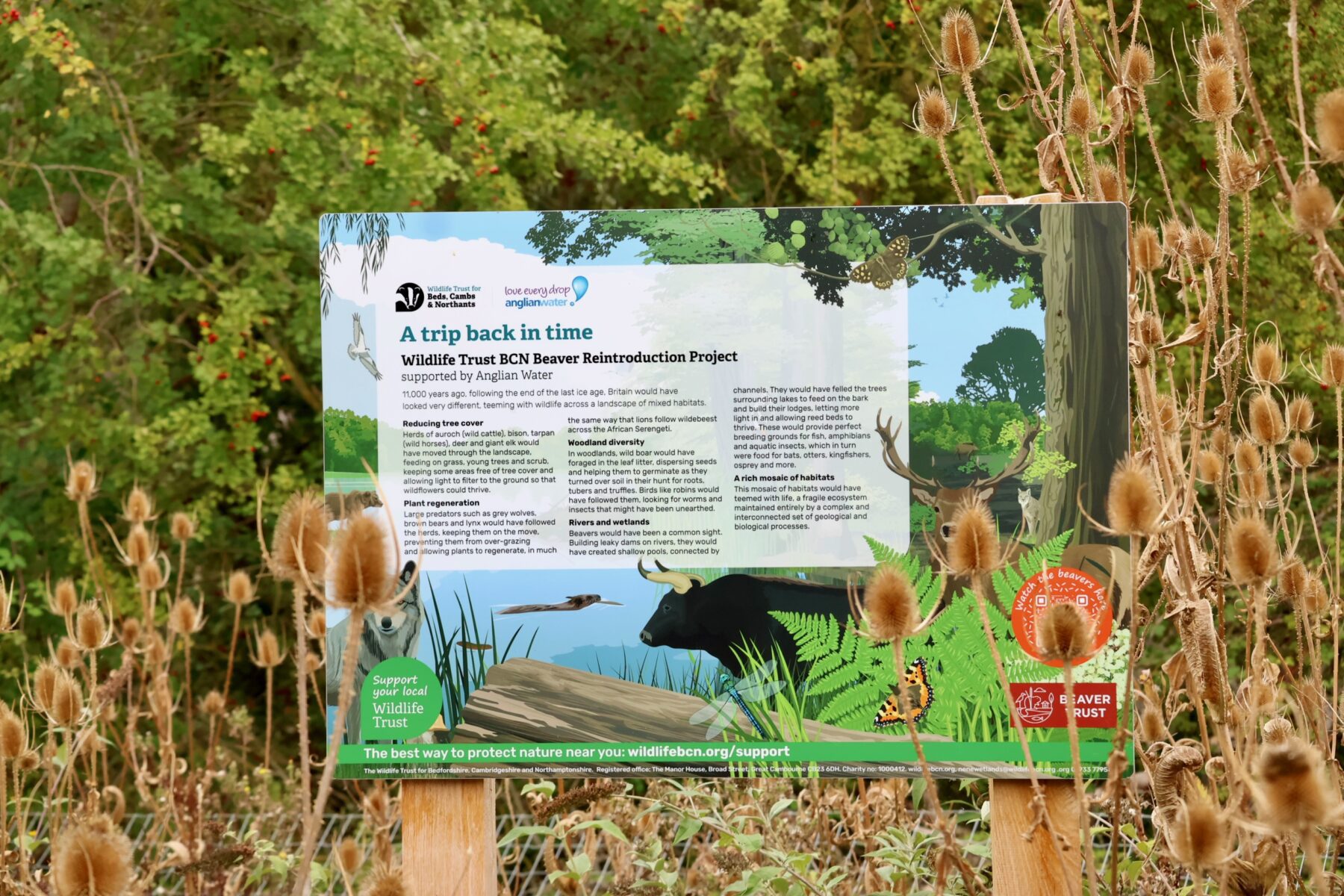
Ben, when asked what mark out of ten he’d give this project, considering all the delays and the change in the legislation, unhesitatingly answers, “More than ten out of ten!”
“The thing that really blew me away was how adept they are at doing their own thing and being individuals. When they were released,” he says, “all eight swam off in different directions. Within a few hours, though, they’d all moved close to the temporary lodge that we’d made. And, within a few days, around that area, every 5 or 10 metres, you’d see bite marks on the trees. It’s as though they were mapping out their territory by tasting every other tree, as if gnawing confers a sense of place.”
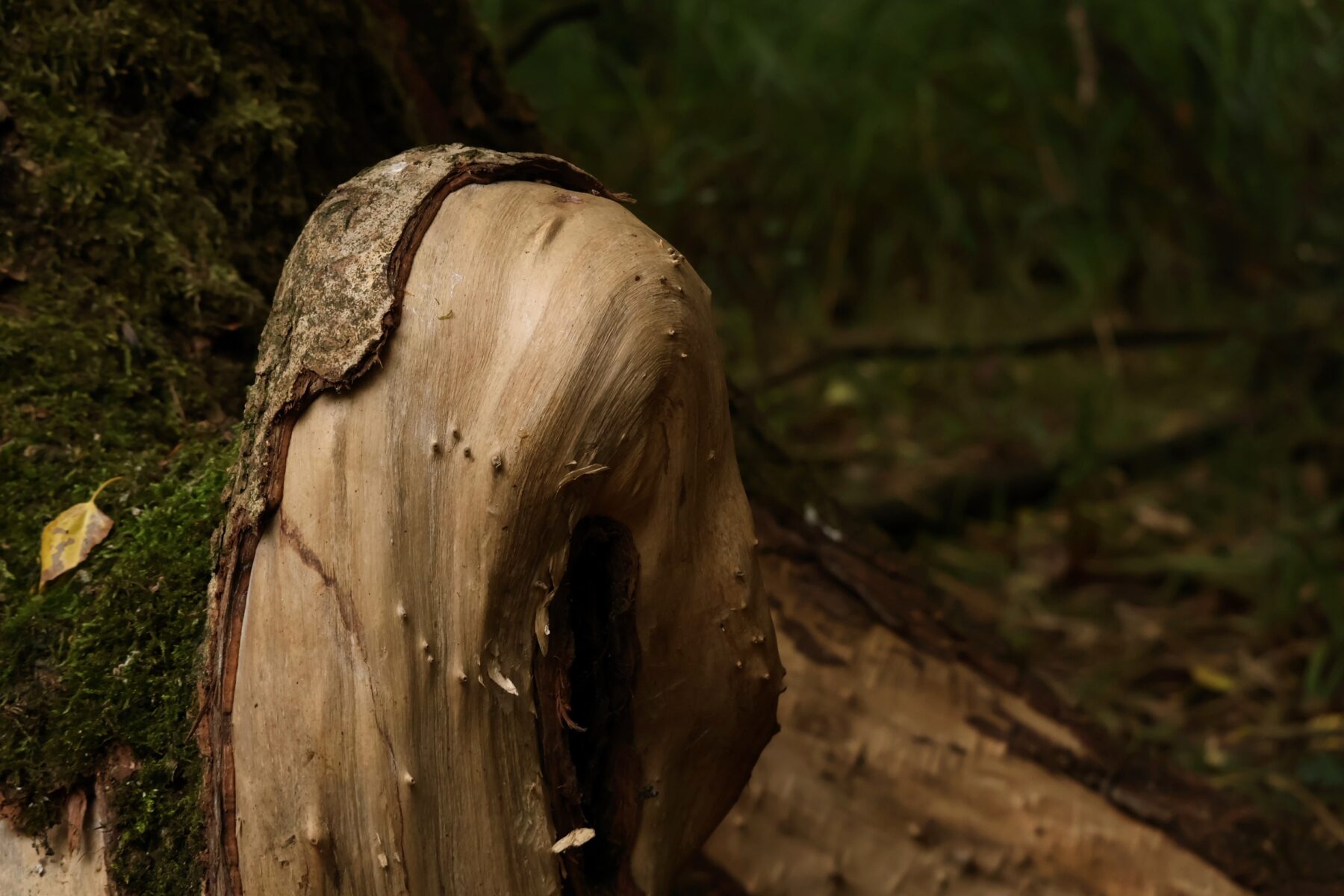
“They can all live together in one lodge as a group, but they also spread out. On the trail cameras, we see much more individual than group behaviour. The kits aren’t consistently following their parents. Their behavioural dynamics have been fascinating.”
Isabella Clarke is an independent researcher whose work explores ethical and philosophical questions arising in human relations with the more-than-human world. She writes on conservation ethics, animal cultures, and multispecies relations, drawing on scientific, philosophical, and experiential approaches. Her recent publications include work in The Ecological Citizen and Plant Perspectives, with forthcoming chapters in volumes published by Springer, Brill and Posthuman Press. Clarke also works as a broadcast journalist and volunteers with conservation organisations in the UK, including the Wildlife Trust BCN.