
 New research from Patrick Cook, PhD student at the University of Stirling and a Senior Ecologist at Butterfly Conservation, explores how beaver wetlands compare to human-made ponds for pollinators, and whether beavers could play a bigger role in reversing pollinator declines.
Can beaver wetlands create a buzz and a flutter for pollinators? That’s a question that has occupied my mind since 2022. It began one evening sat at the edge of a beaver wetland looking at Greater Spearwort and wondering what pollinators visit the yellow flowers of this gigantic buttercup! Subsequently, the research question evolved into a wider understanding of how plants, pollinators and the interactions between them differ between beaver wetlands and human-created ponds.
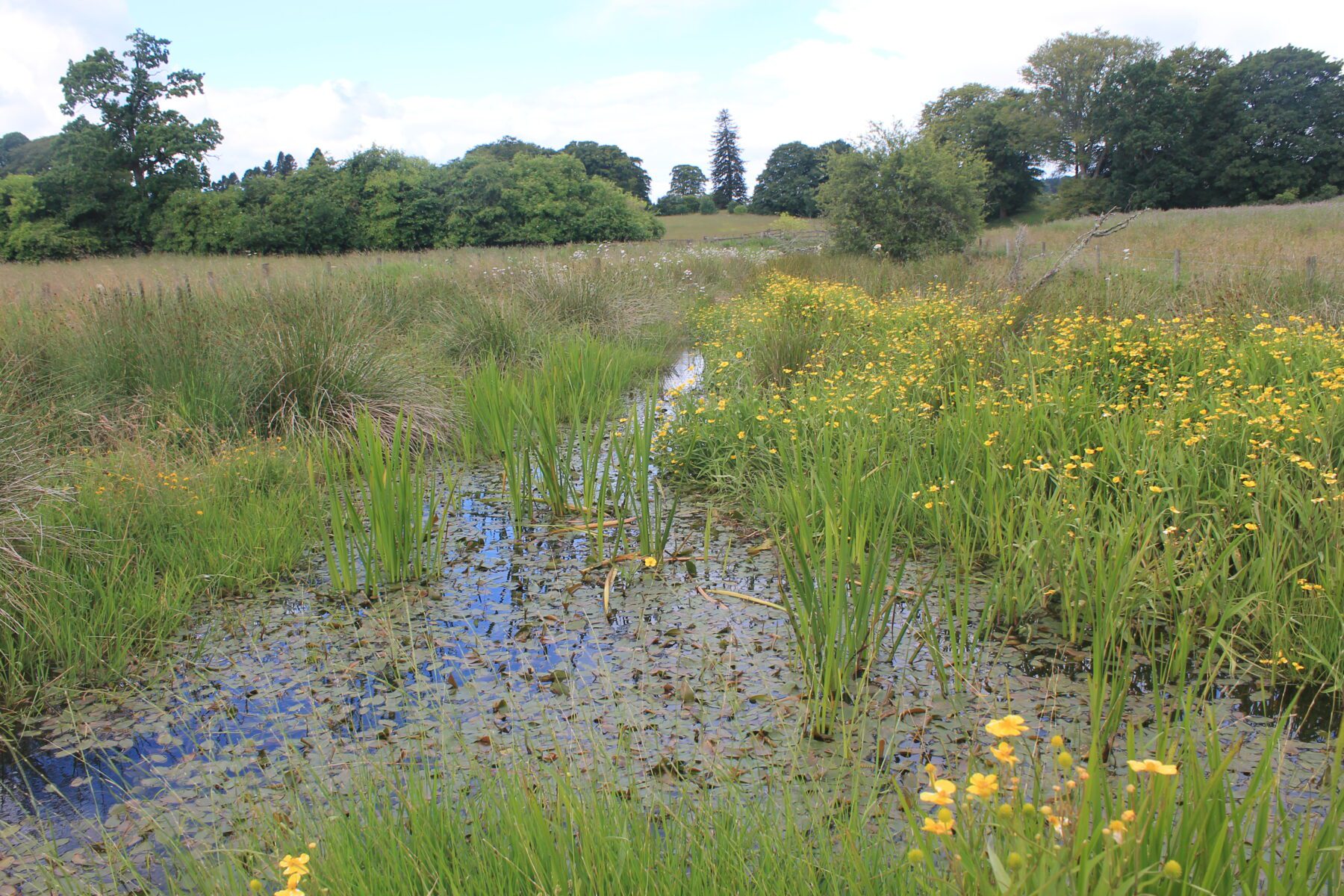
Beaver wetlands
Beavers are second only to humans in their capacity to transform wetland landscapes. They create fantastic, dynamic wetlands by building dams to raise water levels, felling trees and feeding on plants both in and around their ponds. These wetlands are diverse and constantly changing, making them an ecologist’s dream! Many studies have shown that beavers have predominantly positive effects on aquatic wildlife, but increasingly it is recognised that these effects can spill over “beyond the pond edge” and benefit land-based wildlife too. This could potentially include pollinators, a group undergoing worrying population declines in the UK.
As beavers are returning or being reintroduced to many landscapes or regions after a long absence, understanding what impact they have on pollinators has never been more important for practitioners and policymakers. Currently in the UK, beaver wetlands are not well incentivised in agri-environment schemes (support schemes for wildlife on farmland), whereas other wetland types, such as human-created ponds and riparian buffer strips, are more actively encouraged, sometimes specifically for pollinators.
Could we be missing a trick by not including beaver wetlands as part of the wider toolkit in agri-environment schemes and national pollinator strategies to create connected, pollinator habitats?
To address this question, we compared the plants, pollinators and plant-pollinator interactions (flower visits) around beaver wetlands and human-created ponds at sites on and around Bamff Wildland, a pasture and woodland estate in Eastern Scotland.
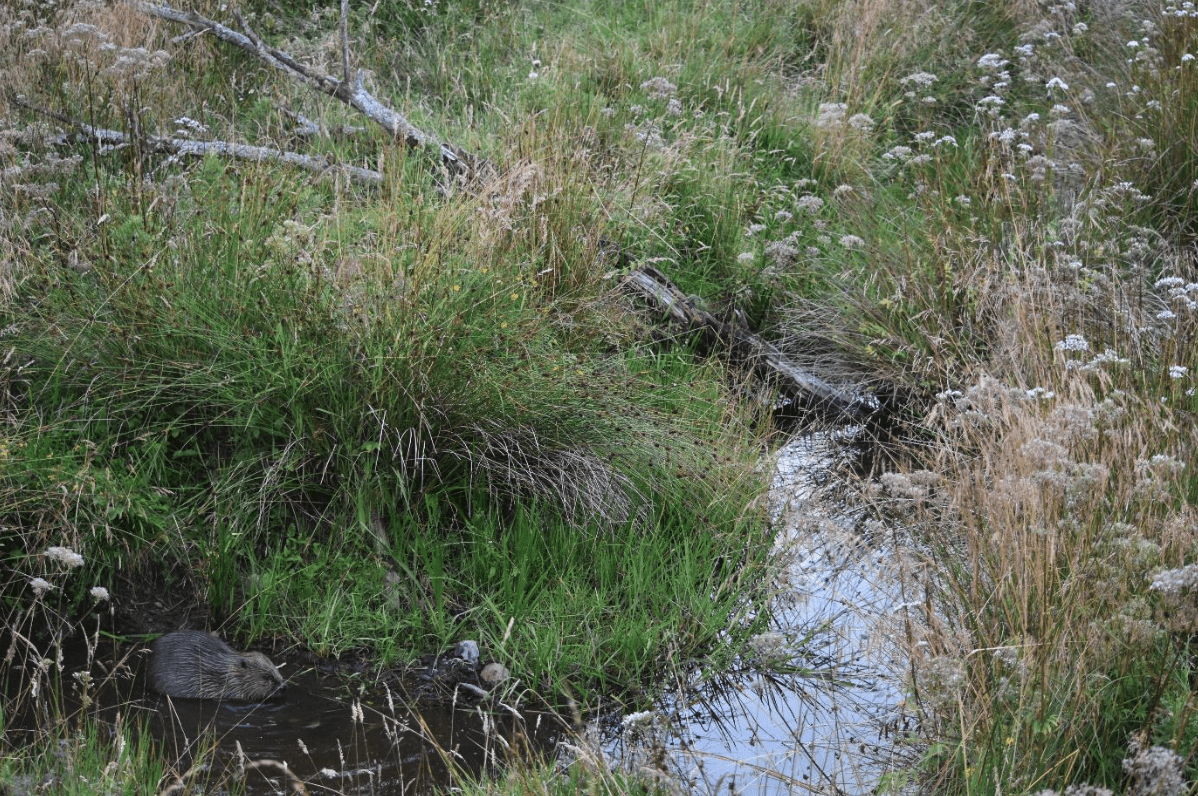
What did we find?
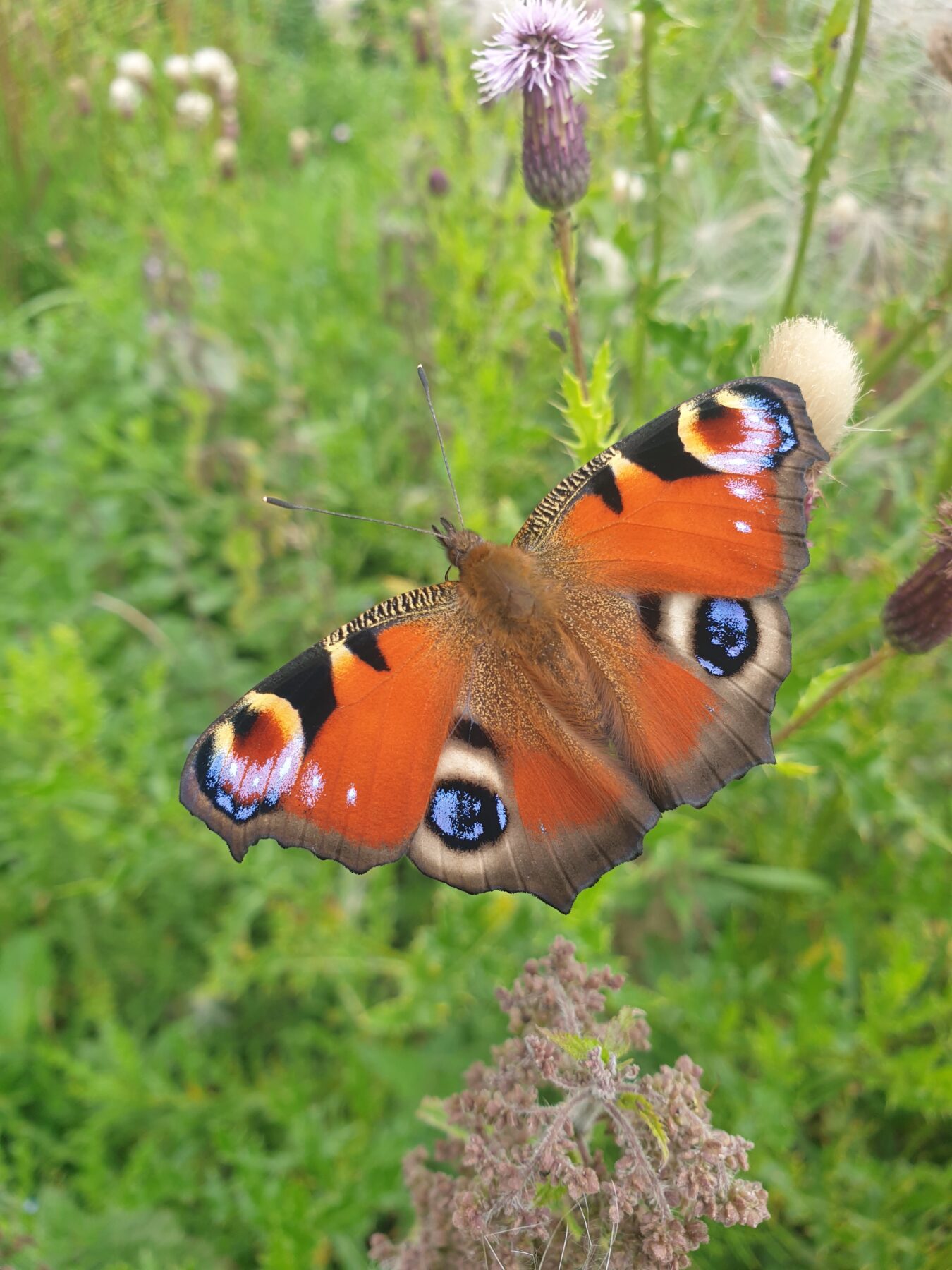
The study found that beaver wetlands provided benefits over and above human-created ponds for some groups (hoverflies and butterflies), whereas for other groups (bees and day-flying moths) the two wetland types were comparable. The headline figures were that beaver wetlands had 29% more hoverfly species, 119% more hoverfly individuals and 45% more butterfly individuals than human-created ponds. The wet margins of beaver wetlands provide ideal breeding conditions for hoverflies that feed on decaying organic material and varied flower resources for feeding pollinators. These findings matter because hoverflies are increasingly recognised as an important group for the delivery of pollination while 80% of UK butterflies show declining trends in their abundance and/or distribution.
We also found differences when looking at plant-pollinator interactions. Hoverflies were the dominant group interacting with flowers in beaver wetlands, whereas bees dominated these interactions in human-created ponds. This is partially due to the difference in vegetation community around the beaver wetlands which support plant species that prefer disturbance from fluctuating water levels, digging and browsing and often produce an abundance of flowers. This suggests that having beaver wetlands in a landscape helps diversify flower resources for pollinators, important as too frequently beaver dams are removed before their wetlands can fully develop.
What does this mean for practitioners?
The findings of our study, set in a typical semi-upland agricultural landscape, shows that beavers boost hoverfly richness, hoverfly abundance and butterfly abundance, while matching up to human-created ponds for bees and day-flying moths.
Beaver wetlands should therefore be viewed as a scalable nature recovery strategy to reverse pollinator declines by restoring breeding and foraging habitat.
Currently, in the UK, most agri-environment schemes support human pond creation or riparian buffer strips, with little financial incentive for landowners to accommodate beaver wetlands on their land, despite the evident potential boost in pollination services. This position needs to change if we are to benefit from the buzz, flutter and hum of pollinators that beaver wetlands promote.
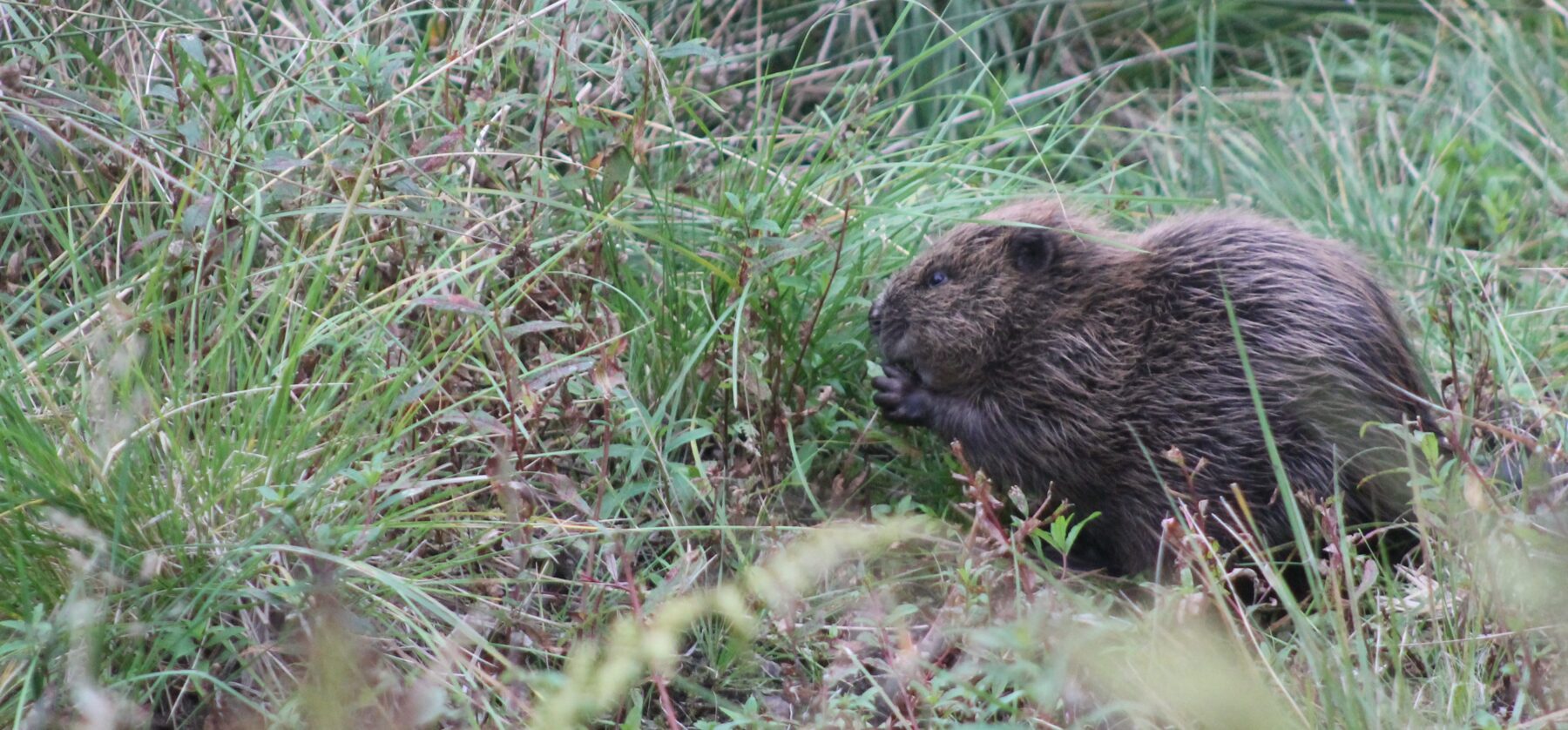
Patrick is a PhD student at the University of Stirling and a Senior Ecologist at Butterfly Conservation. His PhD research involves comparing invertebrate communities around beaver wetlands and human-made ponds. This includes his favourite group of insects, pollinators such as butterflies and moths! Patrick’s wider research interests included how biodiversity responds to habitat restoration at Bamff Estate in Perthshire, but also on other estates across Scotland. Patrick’s PhD is at the University of Stirling, where there has been over 20 years of research on beavers.
Listen to our Lodge Cast episode with Patrick and Nigel Wilby