
 Written by Beaver Trust CEO, Dr Richard Young.
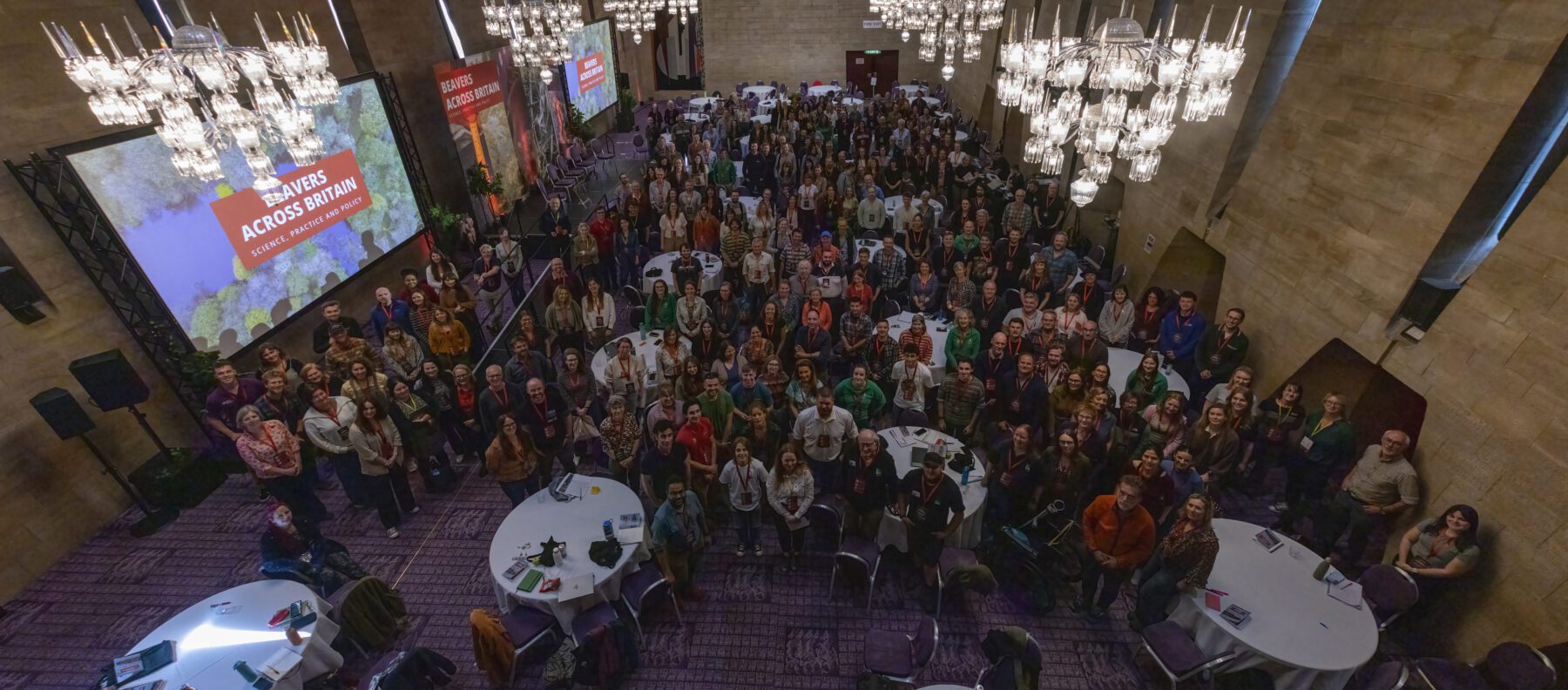
It’s been three weeks since we welcomed 300 conservation practitioners, landowners, policy-makers, communicators and scientists to our Beavers Across Britain conference in Newcastle. Now the dust has settled, it seems timely to share some reflections from our experience of the meeting and our hopes for what will come out of it.
As a modestly-sized team, we don’t mind admitting that organising the conference felt like a big deal. It was a big deal. Making sure things ran smoothly and for all attendees to have a productive and enjoyable time, and for something tangible to come out of it that will drive beaver restoration further and faster. The excitement, and at times slight trepidation, among the team was definitely building in the run-up. Plus, as the Trust’s relatively new CEO, I wasn’t quite sure what I was getting myself into. Coming into this role, I knew beavers were a draw but for 300 people to come together to discuss a single species is a remarkable thing.
It’s tricky to truly understand what any conference achieves. Our aim was to bring together a wide range of people working on the science, practice and policy of beaver restoration, as well as landowners and managers who are or will be affected by beavers returning. To share new evidence and practices, to discuss experiences, to strengthen or forge new partnerships. For science to inform practical experience, and vice versa. For policy to be better shaped by evidence and be grounded in practical reality.
We sincerely hope the event made a difference with this but also with matters perhaps less tangible or measurable that are integral to the dynamics of a community of people striving for the same or similar goals. In our case, in the face of the biodiversity and climate crisis, to restore beavers back to Britain’s waterways as widely and quickly as is possible and in a way that is durable and compatible with (or even enabling of) people’s livelihoods.
Building a shared vision
Firstly, a sense of a clearer shared vision of the future and a deeper understanding of the unprecedented opportunity in front of us to drive nature recovery and landscape resilience through large-scale beaver restoration. Across the plenary talks, panels and workshops, we discussed what we understand about the impacts of beaver populations now that they have been established for a significant time in a few corners of Britain. We shared experiences of delivering reintroductions and debated exciting ambitions and plans for managed releases into our country’s larger river catchments. There was useful and objective discussion for how we can practically mitigate aspects of beaver activity when this causes issues for landowners and river managers. It’s hopeful to see mitigation solutions being developed, tested and rolled out that match the type and scale of the problems.
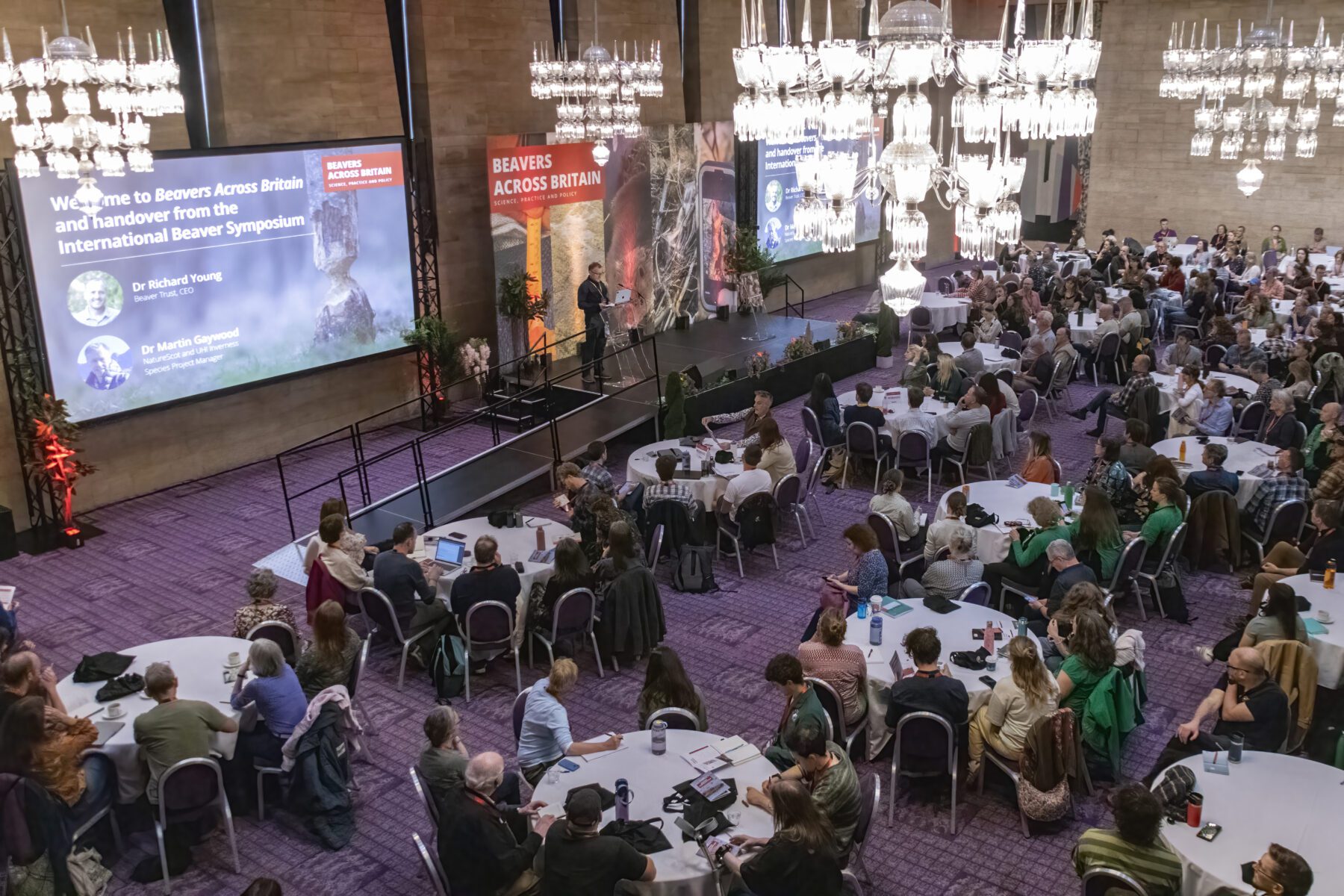
We heard about the interesting concept of ‘renewed coexistence’ which usefully frames how we might think about and enable people to live and work alongside returning beavers. One speaker came up with a great line and interesting framing to this collective mission – to “make beavers boring!”. I bought into what she meant – yes, beavers will always do ecologically remarkable things, but ultimately we simply want beavers to be a normal part of our ecosystems, with any unwanted impacts managed and mitigated sensibly and proportionately. We hope the conference has done its bit to advance this shared vision.
Strengthening a community of practice
Secondly, a stronger and more cohesive community of practice. Of course, as individuals within a community, we might not always agree on everything around how we deliver this mission, but we hope that the conference served to help people better understand each other’s perspectives, ways of working, ideas and plans.
There were so many conversations in the corridors, over dinner and in the pubs doing just this; the sense of energy and drive throughout the conference was palpable. We also hope the meeting has enabled attendees to have easier access to each other’s expertise.
A good example of this was highlighted by a conversation I had with a landowner. He is expecting beavers to arrive on his land in the coming years, and wants to understand the potential benefits and possible negative impacts on his valued and valuable tree crops. He wasn’t sure about attending the conference but came with an impressively open mind and desire to get ahead of any problems. He was able to talk directly to a range of experts to explore the issues and consider potential mitigations. He left with access to expertise that he didn’t have before, and has since arranged a site visit to develop an action plan. It’s just one example, but a powerful one at the heart of our collective efforts to bring about renewed coexistence between people and beavers. The challenge, of course, is how we take this support to scale.
Building momentum and what comes next
Finally, a firmer belief that large-scale change is possible. As many speakers commented, “beavers are back”. A huge change has already happened. One of the panellists remarked that, despite what’s happening in the world around us, attending conferences today about nature recovery in Britain is so much more positive than it was two or more decades ago. I agree with him, and I’m convinced it’s not a case of reverse rose-tinted glasses.
Yes, there is so much work to do to reverse the centuries of pervasive ecological degradation, yes we need to get politicians and businesses taking the biodiversity crisis seriously, but exciting things are happening for nature in our country.
It was particularly pleasing to see in the room a cohort of young conservationists and scientists with their ambitions for nature recovery. So, young and old (well, middle-aged), let’s back ourselves in going further and faster than before.
To sum up, thanks to the energy and expertise of those who attended, we were thrilled with how the Beavers Across Britain conference went. We’ve had some great and useful feedback (but more is always welcome) and some kind comments that mean a lot to us. We are particularly grateful to our colleagues at Forestry England, Cairngorms National Park Authority, Arup and Perdix for the donations and sponsorship that was pivotal in enabling the conference to happen. We’re also grateful to the ConnectIn events team for their support. The Beaver Trust team left Newcastle feeling energised (well, after a couple days rest) and even more motivated for the mission ahead. We hope you did too.
So, do we do it again I hear you (or, if not you, definitely me) ask? Given the rate of change in politics and society we are seeing today, if we run the next conference in three years, there will be lots to consider and debate. How will beavers be faring in 2029? How will our knowledge of beavers and their impacts have advanced? What will science be telling us about how we best design and deliver restoration and coexistence strategies and practices? Will the current practical and policy momentum behind beaver restoration continue to roll or even be gathering pace or, perish the thought, be slowing down? Will the enablers and barriers we need to respond to be the same or similar?
I will leave it there, but thank you again to everyone who attended the conference. For those who were unable to join us, the main talks and a handful of workshops will be available to watch on our YouTube channel in the coming weeks.
Until the next time…
Slides from the conference can be found on the Beavers Across Britain webpage