
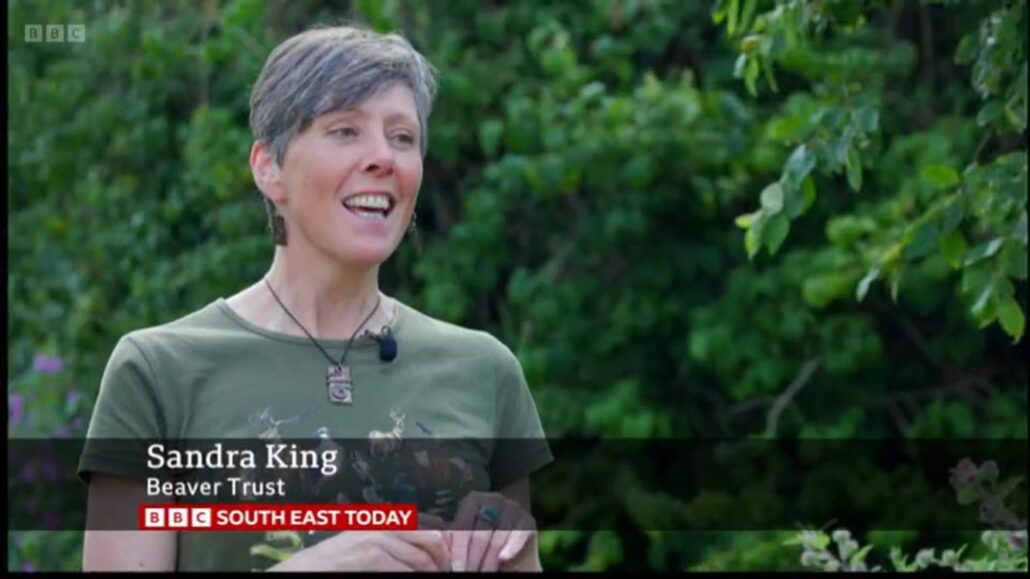
In her last blog as CEO, Sandra reflects on how Beaver Trust’s team and impact have grown over the last four years, and what a joy it has been to lead a charity and team that has achieved so much in such a short time.
This month, Beaver Trust helped to facilitate two catchment-scale wild beaver releases in England, working with our brilliant partners at Cornwall Wildlife Trust and National Trust in Dorset. When I started four years ago, beavers were not even recognised as a native species in England, and there was certainly no framework to release them into the wild. As I prepare to step away from my role as Beaver Trust’s CEO, I have found myself reflecting on these achievements, as well as some of my personal highlights.
When I started in February 2022, I confess that despite my best efforts, I had never actually seen a beaver in the flesh. I quickly remedied that, visiting our beaver holding facilities just outside of Edinburgh. There, I saw one of the beavers we had trapped waiting for a clean bill of health before being moved to a new home. I knew they were big, but when you see them up close, they really are very big! That day, I also saw our Head of Restoration, Dr Roisin Campbell-Palmer sex a beaver – a sight I will never forget and a specialist skill I was happy to leave to the experts!
The most impressive thing about Beaver Trust for me is the staff team. Passion, dedication, hard work, patience, persistence, all day, every day, in all weathers. When I started, we had eight staff, and we are now up to 18. The team does not just handle beavers. They work hard to keep beavers where they are, listening to landowner concerns and finding workable solutions. They also produce stunning documentaries and a podcast that is both entertaining and educational. They generously share their expertise with other people and organisations in the environment sector and with the next generation of nature lovers. They also influence government policy, putting in place the conditions for long-term success.
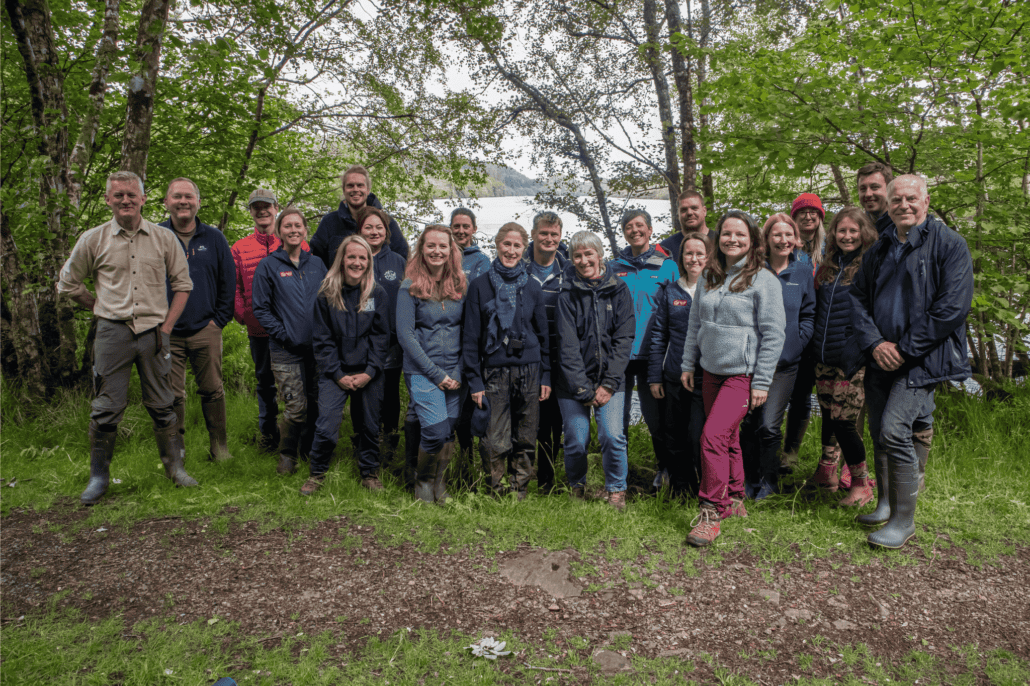
They are a team that has inspired me every day. I have been lucky to have a great trustee board as well; thanks go to them for their calm leadership and guidance.
None of our work would be possible without our incredibly generous and supportive funders, plus all the fantastic partners we work with. From landowners to scientists, practitioners to eNGOs, and the staff in government agencies who are often trying their best to make things happen in politically challenging environments!
Four years later, it’s clear that Britain, its people, and its beavers would be less wild, less informed and less protected without the dedication and hard work of everyone involved. I am excited to see what the team achieves next as I hand over to my successor.
Below, you can read more highlights and some of my favourite memories. But if you only read this far, there is one thing to take away – I want to say a huge thank you to everyone who has supported me, Beaver Trust, and ultimately the continued restoration of beavers to Britain over the last four years.
2022: The year beavers were lodged in legislation
We work across Britain, and our work is different in each of the three countries. When I started, Scotland was – and still is – ahead of the game. Wild releases have been the norm there since 2021, but it was in 2022 that NatureScot published its beaver management strategy to 2045, something that Beaver Trust staff had championed and helped to shape. Just a month or so later, beavers received protected species status in England, a key milestone we had been pushing hard for, which eventually paved the way for the recent wild releases.
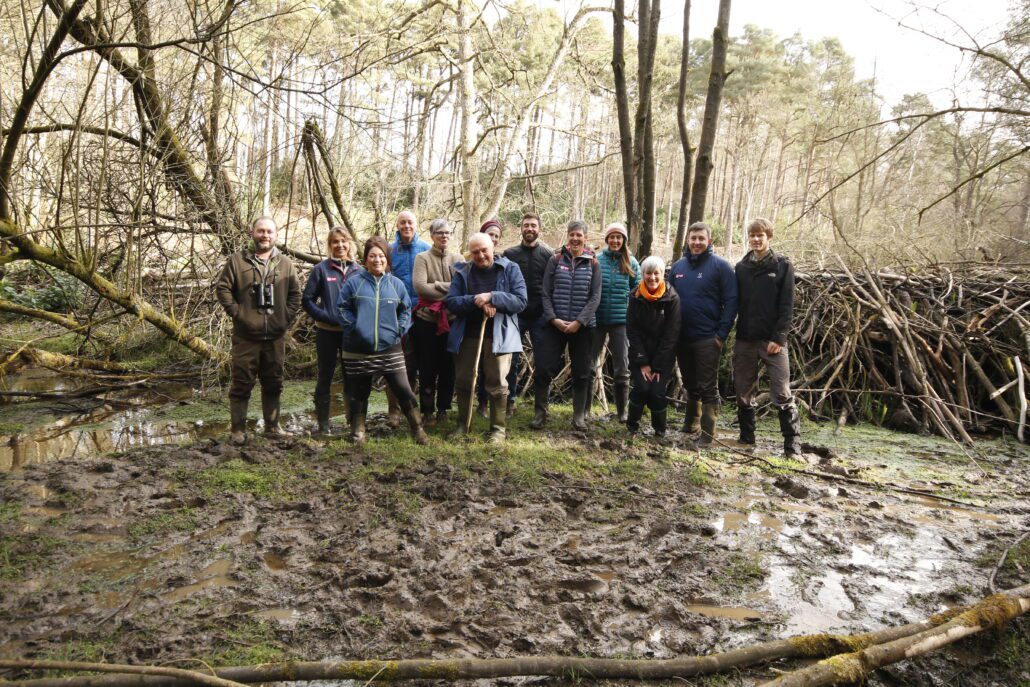
The Beaver Trust team is entirely remote and one of my first actions as Beaver Trust CEO was to introduce team gatherings. Twice a year, we get together for a few days, work together and bond. Before this first event in Pickering, North Yorkshire, many colleagues had never met! We have visited beaver sites across Scotland, England and Wales, but when the team lives as far afield as Perth in Scotland down to Cornwall, the pub visits are as important (and more popular) as the work we get done.
In 2022, we doubled the capacity at our specialist holding facilities at Five Sisters Zoo enabling us to trap, health screen and translocate more beavers. This facility is important for animal welfare and a key part of the beaver mitigation strategies used across Britain.
When planning those translocations, genetic diversity is a big consideration. Did you know that we’re involved in beaver matchmaking? In 2022, we gained our first contract with Natural England to maintain the beaver studbook. This database of beaver genetics is a tool we now use regularly to inform new beaver pairings as the population expands.
Our documentary, On The Edge, premiered online and was watched by over 500 people, highlighting the key role that river buffers play in our ecosystems, and how beavers can help.
2023: The year beavers went mainstream
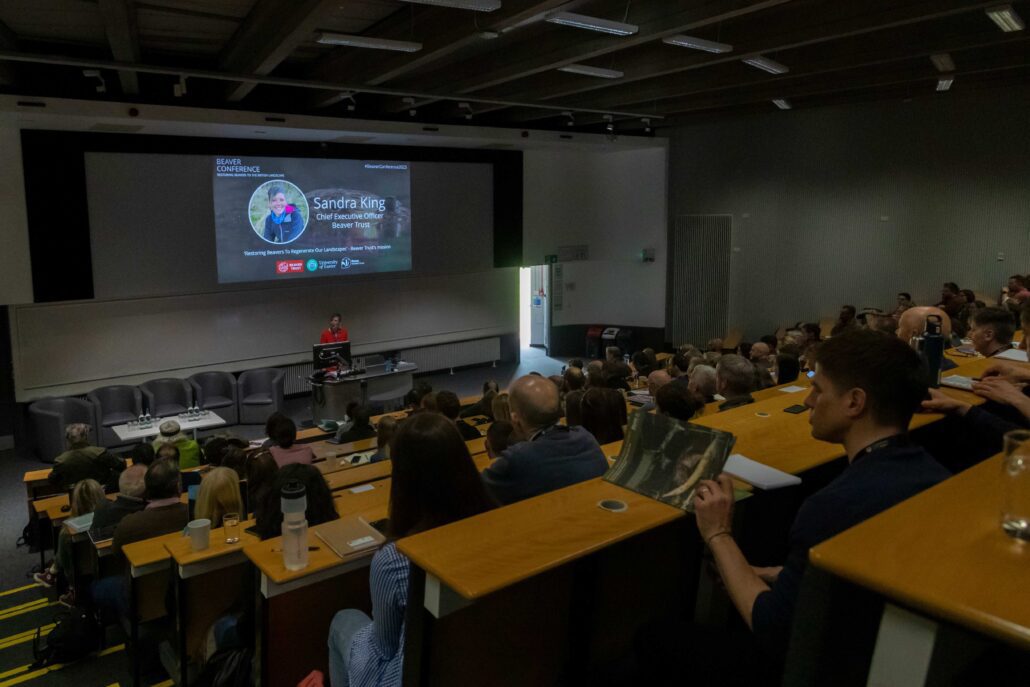
The Beaver Trust team pulled out all the stops in 2023. We hosted over 200 attendees at our first (but not last) national Beaver Conference, and oversaw the release of beavers at 18 sites across Britain.
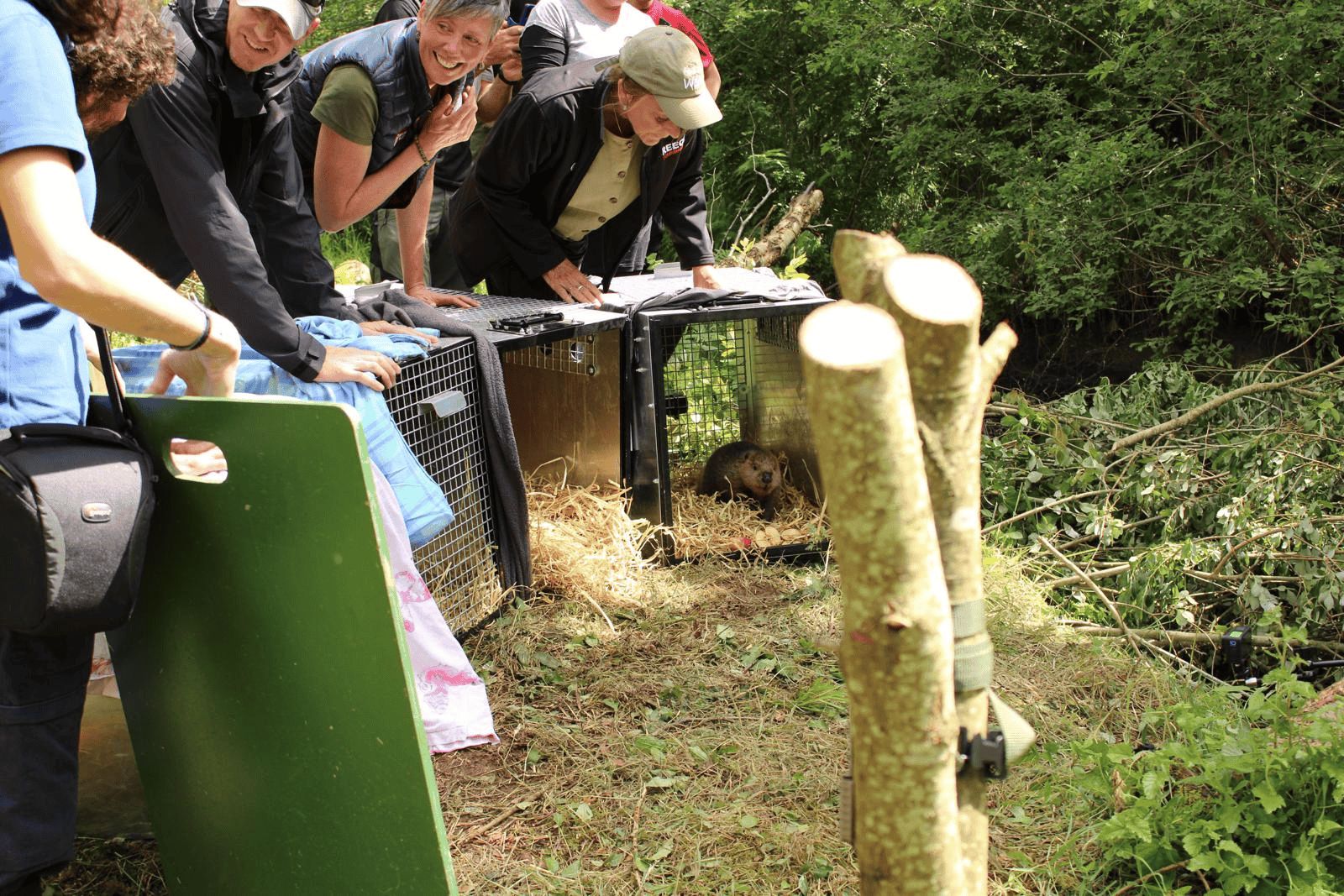
One of those releases would become not just a highlight of 2023, but a highlight of the job, and my life! I went with our restoration team to the National Trust Wallington beaver release in my home county of Northumberland. The first beavers in the county for centuries. Unknown to me, Sally, the wonderful property manager, had decided that I would be one of the four lucky people opening one of the crates, telling me only an hour or so before they arrived. I was beyond excited!
As CEO, I don’t get very much time with beavers, but with this family, I made an exception. I wanted to really get to know the site and make a connection with this family of ecosystem engineers, and I have been back every couple of months since then to see how the site is developing under their stewardship. They have built one of the biggest lodges I have ever seen, restored flood meadows, created dams, ponds, habitat, slowed the flow – everything you would hope to see. An absolute joy and a privilege to be involved. I am told I am welcome back anytime, even after I leave Beaver Trust, and I definitely intend to take up that offer.
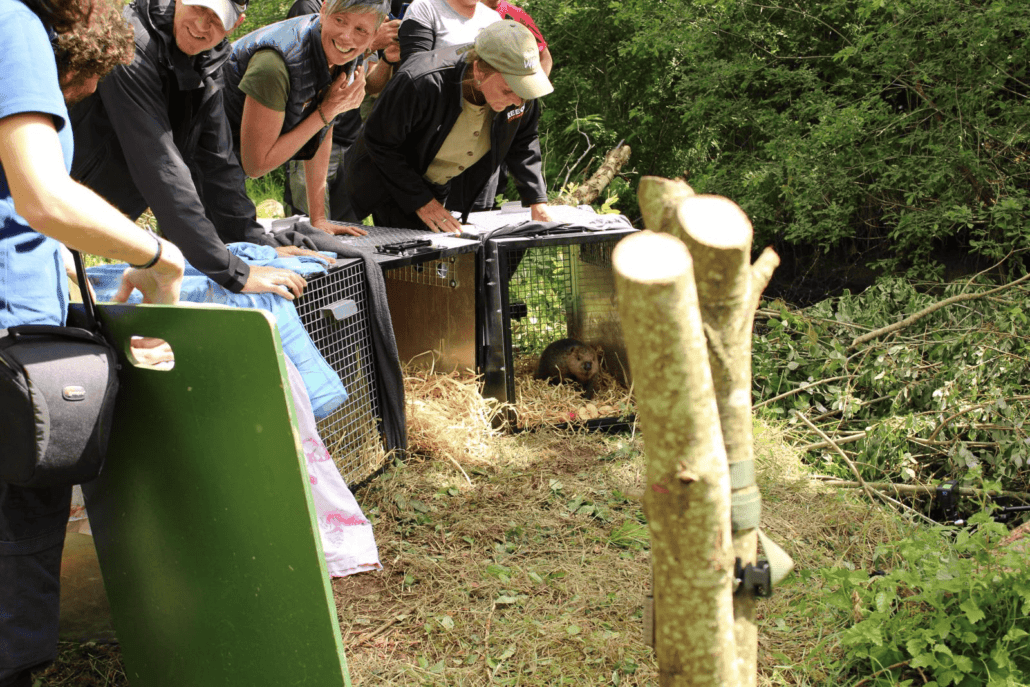
The youngest kit from this Wallington family was born at our holding facility at Five Sisters Zoo, under the care of an expert team including our specialist vet Romain Pizzi. Their special story was documented for our YouTube channel.
There were two more notable beaver releases in 2023, which couldn’t be more different: a catchment-scale wild release in the Cairngorms and an urban beaver release in Ealing in London.
Beaver Trust facilitated the release of a family of five beavers at the Ealing Beaver Project, the first urban beaver project in Britain. A fantastic initiative spearheaded by celebrity vet Dr Sean McCormack, who is now an ambassador for Beaver Trust, and Elliot Newton of Citizen Zoo. This release garnered a good deal of media attention, including an endorsement from the Mayor of London who attended the release, and whose smile on the day was both genuine and contagious.
Shortly afterwards, and several hundred miles north, there was a historic release in the Cairngorms – the first translocation of wild beavers to a new catchment in Scotland. The momentous day came after a thorough licensing process, including stakeholder engagement and collaboration, something vitally important to secure a harmonious future for beavers and their communities. Cairngorms Beaver Group, a partnership of individuals and organisations – including Beaver Trust – managed the reintroduction of beavers to the Cairngorms, and won the CIEEM stakeholder engagement best practice award, thanks to their dedication.
One of the wonderful things about beavers and Beaver Trust is the hope that it brings, and how that pulls people together. During 2023, Beaver Trust joined forces with amazing organisations in the Wildlife and Countryside Link and Scottish Rewilding Alliance. Working in partnership in this way increases our reach and impact as we strive to influence government policies. Our Communications team also took journalists and influencers on tours of Scottish beaver sites, giving them first-hand experience of the changes beavers bring.
2024: The year beavers branched out
Aiming to upskill and enthuse many more people, we ramped up our training and education efforts in 2024.
With funding from the National Lottery Heritage Fund, we launched a three-year education project that is bringing science and a love of beavers to the next generation. We also partnered with CIEEM and the Mammal Society to deliver Natural England-accredited professional training courses supporting best practice beaver management and help learners qualify for their Beaver Management Licenses.
The Kent survey results confirmed 51 beaver territories, which is powerful evidence that coexistence is possible and demonstrates how beavers can become part of modern landscapes – even in the heart of Canterbury!
These findings were the culmination of two years of work, 51.27km of river surveying on foot and canoe, over 2,000 beaver signs logged and included help from partners at the Environment Agency and Kent Wildlife Trust. One of my best beaver sightings was on the River Stour, just behind the Sainsbury’s car park in the city centre.
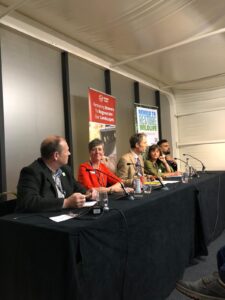
At the Labour Party Conference in Liverpool (the first party conference Beaver Trust had ever attended), I sat on a panel at a fringe event we co-hosted with Rewilding Britain. With a standing-room-only audience, we discussed the role that species reintroductions could play in delivering the government’s nature and environment commitments.
2025: The year support flooded in
We launched our third documentary, Balancing The Scales, exploring the interactions between beavers and fish. It became our most impactful film yet, combining the knowledge of beaver experts and fish experts, bridging a gap between two communities whose interests can often feel conflicted while highlighting the research of Dr Robert Needham, our Restoration Manager, whose PhD research on salmonids and beaver dams has been instrumental in the field.
I loved taking the film on tour; five in-person screenings in five weeks was a massive challenge, but of course, the team pulled it off. And that was despite some comedy timing. Westminster’s announcement that wild releases would be permitted in England came as I was heading up to Inverness for a screening that night! Just a few days later, the first authorised wild release in England took place in Purbeck in Dorset – the culmination of several years of hard work by Beaver Trust and many others.
The 10th International Beaver Symposium in Scotland was an opportunity for our team to present their research, including post-release survival rates (among the highest recorded globally), monitoring the impacts of beavers on floodplain habitat, and a new beaver dam assessment methodology for salmonids (known as BDAMS).
We work closely with our European counterparts so it was a great opportunity to catch up with colleagues in person.
After an extraordinary number of hours in the field, the Restoration team completed the largest beaver survey in Europe (possibly the world!) – a large-scale survey of the River Tay and its tributaries. The results, due to be published later this year, will help shape our collective understanding of beavers in Britain.
With our Riverscapes partners, we launched Making Space for Water in June, a campaign to improve how we use the space around our rivers. A launch event at Westminster was well attended and our petition received over 10,000 signatures, prompting a formal response from the government. The campaign is still ongoing – with plans to ramp up pressure to secure the changes we need.
Wales is also positively moving forward, with the Welsh Government announcing its intent to grant beavers protected status, paving the way for future wild populations.
Beavers and Beaver Trust have all come a long way in the last four years, but there is still a way to go if we are to get closer to our vision of ‘thriving waterways vibrant with life, where beavers are embraced as a vital part of our biodiverse landscape’. I am proud of our journey so far, and delighted to be passing on the baton to our new CEO as they lead the team to push for more ambitious beaver restoration in 2026 and beyond.