
 This blog was written by Daniel Arah, Masters student studying Zoology at the University of Glasgow, reflecting on his placement year with the Restoration team here at Beaver Trust.
Looking back at my time at Beaver Trust, it’s hard to believe it’s only been one year. I could easily ramble for hours — if not days — about the knowledge, skills and memories I’ve gained, but I’ll try to keep this concise for all our sakes.
Back in January last year, I was accepted onto the University of Glasgow’s integrated Master’s programme, which includes a year-long work placement between the third and fourth year of study. I reached out to Beaver Trust to ask if they might be interested in hosting me, and was ecstatic when they said yes.
Six months later, after navigating seemingly endless university paperwork, I started at Beaver Trust as part of the Restoration team. Beginning in August meant jumping straight into action, as beaver kit dependency was drawing to a close and trapping season was beginning. The long days hauling traps in the field were a world away from the theory-heavy learning I was used to at university — and I was ready for it.
Trapping with the restoration team was dynamic; plans had to be adapted each morning depending on where beavers had been trapped or spotted on trail cameras and the limited van space made moving traps and people between sites reminiscent of a school maths problem. The depth of knowledge and experience that the team implemented in trapping was inspiring, and by the end of the trapping season in March we had successfully trapped and translocated 79 beavers.
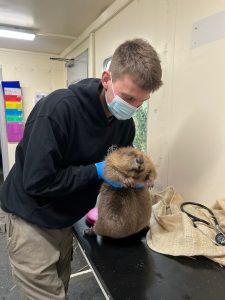
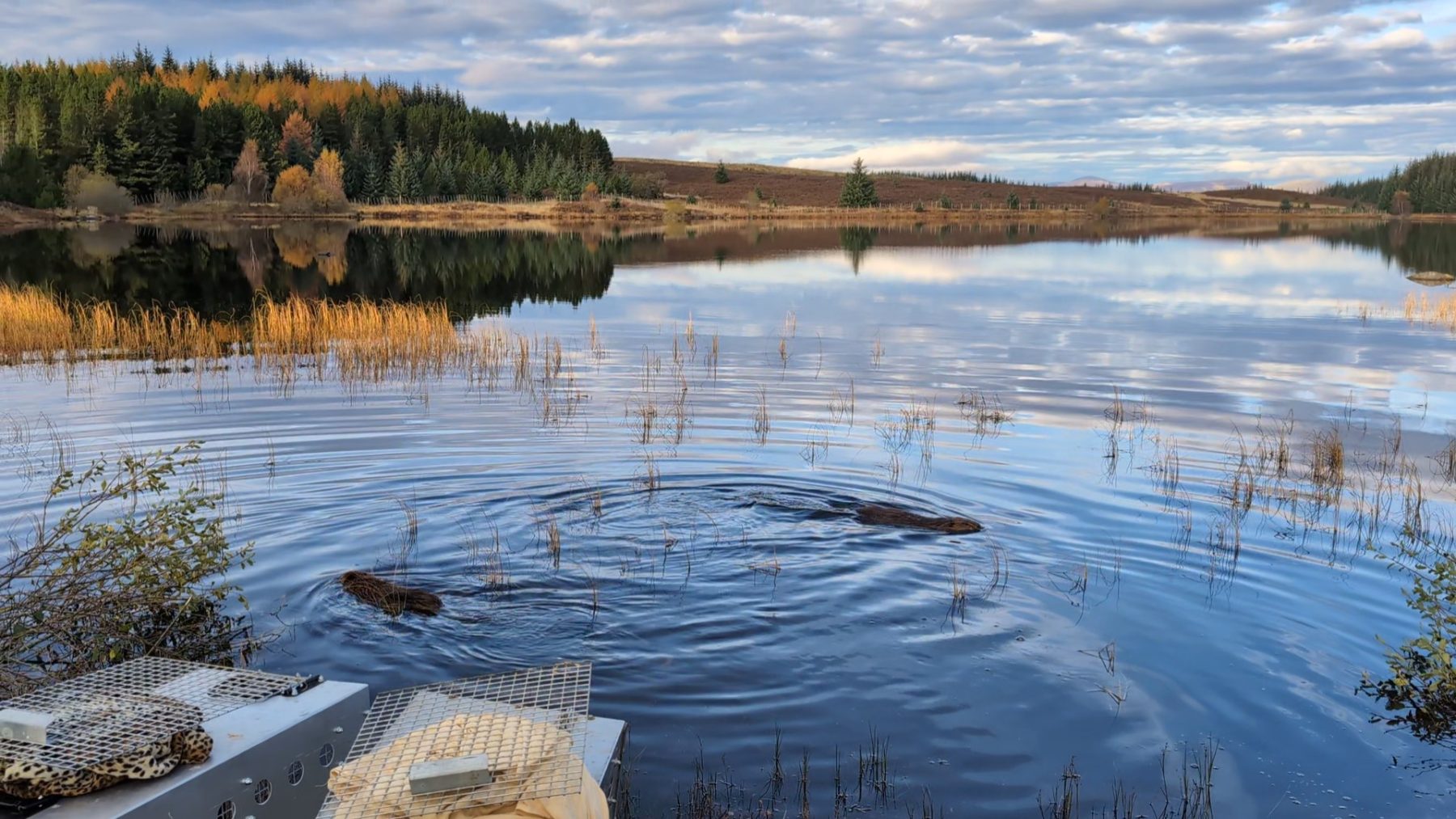
My first beaver release was unforgettable. It began early at Five Sisters Zoo, where the beaver holding facilities are located. A family of seven was being released, and each one had to be ushered into a travel crate. Some shuffled in willingly, while others were less enthusiastic. Eventually, all were loaded into the van for the slow drive up to the Cairngorms, their new home. Three hours later, we arrived at a gamekeeper’s hut where around 15 people and a few off-road vehicles were waiting. The beavers were transferred onto all-terrain quad bikes and carried across the heather to a remote loch, surrounded by aspen and willow — beaver paradise.
Seeing beavers return to their former habitat for the first time in 400 years is a moment both quiet and immense. Watching a confused beaver shuffle out of a crate and splash into a loch it would be easy to forget the importance of the event. But watching this family explore their now home, new to them but somewhere that was shaped by their species for millennia before they were extirpated, was a beautiful glimpse of hope in the conservation and restoration of Scotland’s native wildlife.
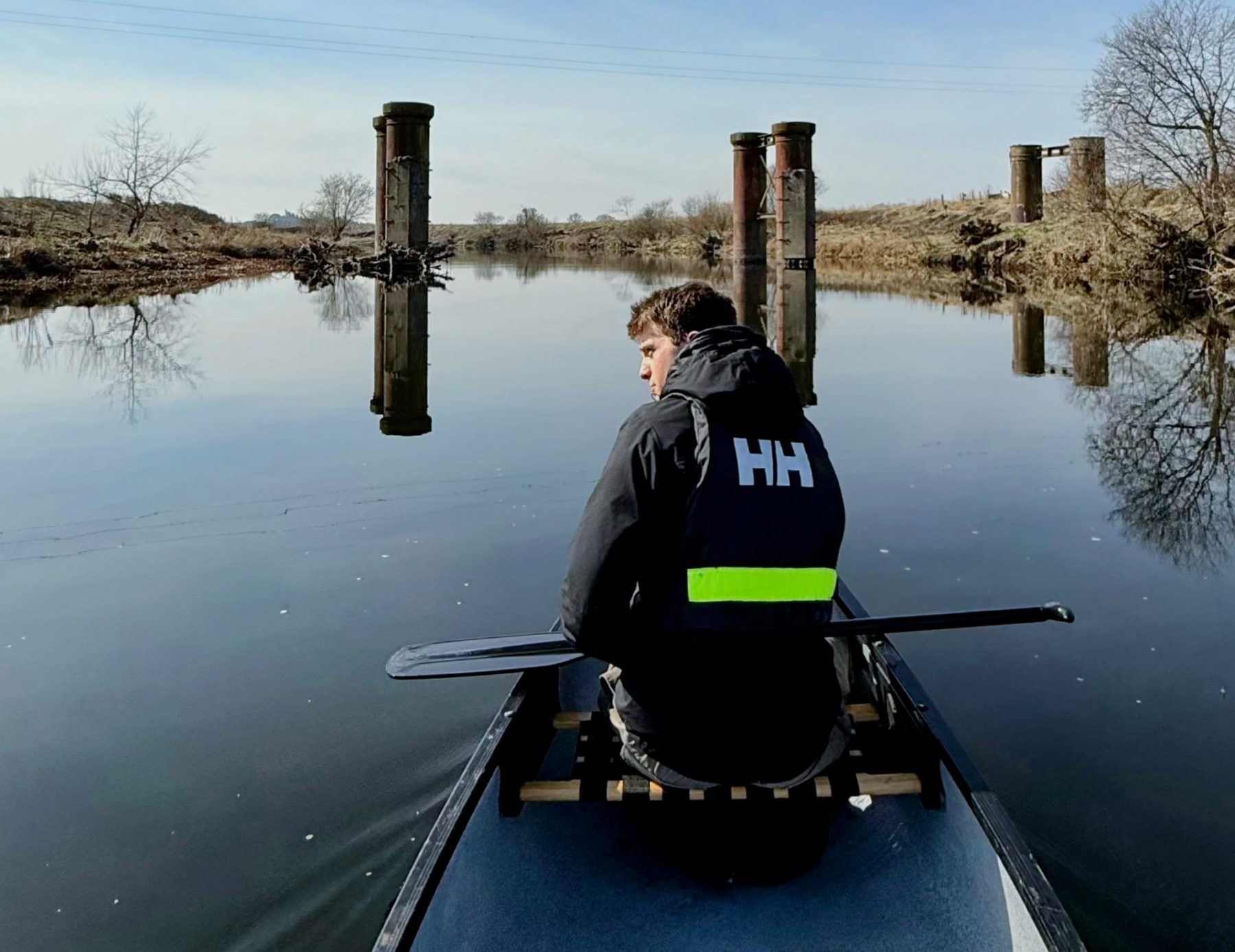
There was no pause once trapping season ended. The restoration team immediately moved on to the next project: a full survey of Scotland’s beaver population. Estimating the beaver population is a huge task, made slightly easier by the tell-tale signs beavers leave behind. From small signs like feeding and scent mounds to unmissable structures like dams and lodges, if you know where to look you can cover a lot of ground. This survey took me across hundreds of miles of Scotland’s waterways — walking and canoeing everywhere from narrow field ditches to the River Tay and Loch Lomond. I developed a deep understanding of Scotland’s river systems, from source to sea, and encountered an incredible range of wildlife along the way. The sunny days spent surveying by foot and boat are among my favourite memories. The rainy days perhaps best forgotten.
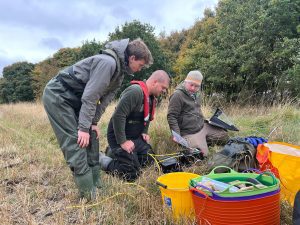
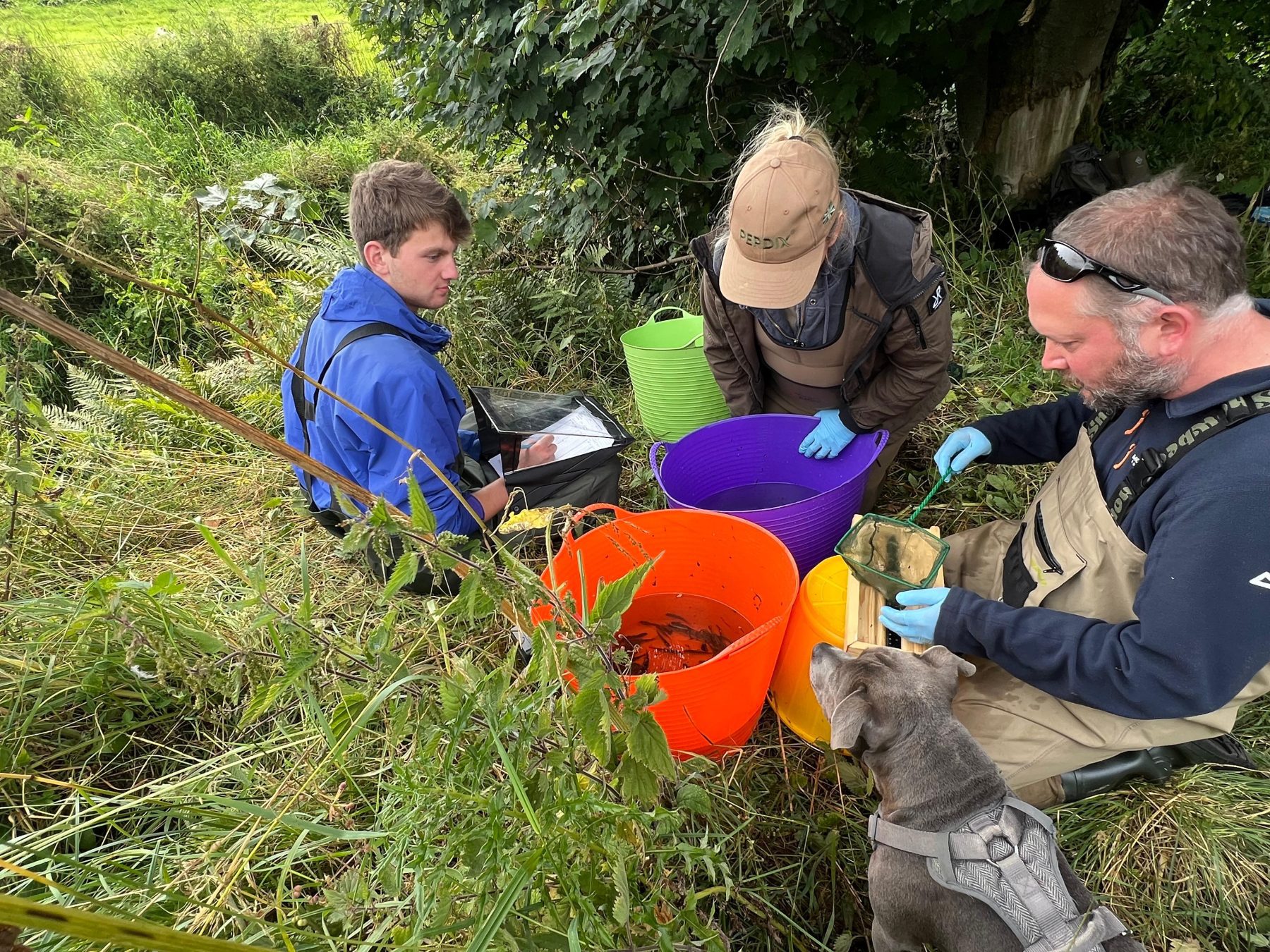
Alongside trapping and surveying, I was able to experience a huge variety of the team’s work — from installing flow devices and tree wrapping, to electrofishing and health screening. I also had the privilege of completing two pieces of research, working with some of the world-leading scientists within Beaver Trust.
This year has taught me so much. I feel incredibly fortunate to have had the opportunity to work with such a dedicated conservation charity and such an experienced team. Besides all the skills and knowledge I gained, I also had loads of fun and made some great friends.
Thank you Beaver Trust!